Tuesday, July 2, 2019

Having Fruitful Conversations When You are in Majority Culture

We need to break through the majority culture worldview for the sake of the Kingdom.

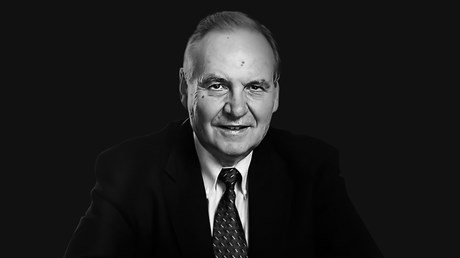
I’m a white male who teaches at a prestigious college.

There’s much to unpack in that sentence, but it’s certainly a position of cultural power.

As a white male, I’m certainly representative of the majority culture in the contexts where I live. So, I think part of the question is: How is the conversation different when you, and those with whom you closely identify, are in members of the majority and thus in possession of cultural power?

In other words, and in my case, how does a white male have conversations about diversity and more?

First, We Have to Define the Conversation—and Decide Who Defines It

As a majority-culture person, the first point of discussion is allowing people to define the conversation differently than you. That may be difficult for man like me—some people have been members of the cultural majority their entire lives and know nothing else. They might be completely blind to their privilege or the many advantages that their status has brought them.

On the other hand, others might have always been a part of the cultural minority and so they’re coming into the conversation with their own set of observations and experiences.

It might require a bit of humility for those of us coming from majority contexts, but one of the most important things we can do in this stage is actually quite simple: listen. Don’t assume you have all the facts when you might only have them in part. Listen to people’s stories, ask good questions, and don’t hesitate to admit it when you’ve been proven wrong.

I’ve not always succeeded at that, though I want my impulse to be to try.

When they were in a racially divided moment, I asked African American evangelical leaders to come ...

Continue reading...


from Christianity Today Magazine https://ift.tt/2RPLDih

Why ‘Let Go and Let God’ Is My Lifeline

Trusting in the Lord has made my life both easier and harder.

Not long before his death, Henri Nouwen wrote in Sabbatical Journeys about some friends who were trapeze artists. They shared with Nouwen about the special relationship between flyer and catcher on the trapeze. The flyer lets go, and the catcher catches. As the flyer swings high above the crowd on the trapeze, the moment comes when she must let go. She arcs out into the air, where her sole job is to remain as still as possible as she opens her hands and waits for the strong hands of the catcher to pluck her to safety. One of the trapeze artists told Nouwen, “The flyer must never try to catch the catcher.” The catcher will catch the flyer, but she must wait in absolute trust.

The gospel calls us to a similar spirit of open-handed living. Over several decades of following Jesus, I’ve learned that the essence of surrender is found in the posture of our hearts. In this place of yielding, we give the Holy Spirit free rein to direct and sustain our journey, and we also realize that our lives are part of a much greater narrative: God’s story of hope and restoration in the lives of individuals, families, communities, and local churches.

My first big surrender came shortly after beginning a relationship with Jesus in high school. My dad went through a midlife crisis—which included a fancy sports car followed by a perm (another story, another time)—and then he shared the news that we would be moving from Colorado to Hong Kong right before my senior year. Angry and confused, I unleashed my frustration and let God know exactly how I felt about the situation. But at the end of my tirade, I added a sincere prayer: “In my heart of hearts, I really want to know you and do your will.”

This prayer ...

Continue reading...


from Christianity Today Magazine https://ift.tt/3010lFW

Monday, July 1, 2019

Died: Apologist Norman Geisler, Who Didn’t Have ‘Enough Faith to Be an Atheist’

The masterful theologian leaves behind nearly 130 titles and a global impact.

Just two months after his retirement from public ministry, evangelical theologian Norman Geisler died Monday at age 86. He had been hospitalized over the weekend after suffering a blood clot in his brain.

Described as “a cross between Thomas Aquinas and Billy Graham,” Geisler was a prolific author, apologist, and professor, as well as the co-founder and former president of Southern Evangelical Seminary (SES) in North Carolina and co-founder of Veritas International University in California.

Many evangelical leaders consider Geisler among the top Christian thinkers in recent decades, with pastor Derwin Gray calling him “one of Christianity's greatest philosophers, apologists, & theologians” and Colson Center president John Stonestreet remembering him as “a towering figure in Christian apologetics and philosophy.”

Geisler was respected for the breadth and depth of his career of over 70 years, and his model of defending the faith and the Bible through classical apologetics. Current SES president Richard Land described him as a powerfully refreshing voice that inspired conservative scholars, ministers, and fellow apologists.

“For us, Dr. Geisler’s latest defense of the faith was like a long drink of cold water in the midst of what was too often an arid and sterile theological landscape,” Land wrote. “Dr. Geisler has been the ‘go to’ authority for more than two generations of evangelical seminary students who were looking for a bold, erudite, and uncompromisingly faithful defense of the inerrant, infallible Word of God and the historical doctrines of the Christian faith.”

He was on the team of theologians that wrote the 1978 Chicago Statement on ...

Continue reading...


from Christianity Today Magazine https://ift.tt/2KQHREM

Evangelicals Can Help at the Border. They Just Can’t Do It Alone.

To make an impact among migrants crossing through Texas, churches rely on government advocacy and ecumenical partners.

When The New York Timesreported on toddlers without diapers and children without toothbrushes at US Customs and Border Patrol facilities, Christians joined the rest of the country in dismay.

They shared the stories chronicling poor conditions and promoted campaigns to donate money and send supplies, desperate to do something to help. But the facilities at the center of the reports have turned away donations.

This saga has brought new attention to the crises at the border, particularly for children of asylum-seekers, and the role of US churches in offering a compassionate response. Where are evangelicals already at work among the latest wave of migrants? What more can be done?

Leaders like San Antonio pastor Max Lucado have urged Christians to pray and act. “This is a mess. A humanitarian, heartbreaking mess. As we are wondering what can be done, let’s do what we are called to do,” he wrote in a lament for CT. “Let’s pray. Let’s lament. Let’s groan.” (You can read a collection of six Christian leader’s prayers for the border here.)

Grief over the conditions at the border has compelled many evangelical Christians to act, but they prefer to work directly with evangelical mercy ministries.

However, in these moments when the law stands between Christians and acts of mercy—like not being able to drop off donations at a detention center—they can be uncomfortable with idea of supporting government aid or state humanitarian efforts, said Kathryn Freeman, director of public policy for the Texas Baptists’ Christian Life Commission.

“Even for Christians who tend to be leery of government intervention,” Freeman said, to get the diapers and wipes to the children ...

Continue reading...


from Christianity Today Magazine https://ift.tt/2J31PtM

Grieving Our Broken Border

Max Lucado and five other leaders share their petitions: “Let’s pray. Let’s lament. Let’s groan.”

As CT’s immigrant communities editor, I was planning our coverage of the crises affecting immigrant children at the Texas border when I saw the now-infamous Associated Press photo: that little arm around the neck of her father, hanging on as they drowned in the Rio Grande.

Days of pent-up journalistic angst cracked, and I sobbed. I cried thinking of the fear of those last moments. I cried in dismay knowing that, if they had made it, they might have been safe. I cried in frustration knowing that, if they had made it, they might not have been safe.

She could have been one of the diaper-less toddlers in a detention center. One of the 700 separated from her parents in the last year. One of 125 to be left behind after the parents were deported. She could have been one of the 1,000 or more children abused while in US shelters. Meanwhile, authorities continue to discover unidentified border-crossers dead in the South Texas desert—most recently, a young woman, toddler, and two infants found in Mission, Texas.

As I continue to report on Christians at the border—the humanitarian work ministries are doing there as well as efforts to lobby Congress for a better system—I realized we must begin with lament over the hopelessness and danger these image-bearers face.

Lament is a cry for mercy or help in a time of sadness and regret. Because we are uncomfortable in lament, we often look away in times of overwhelming tragedy. We don’t want to feel grief over the deaths of migrant children: Carlos Gergorio Hernández Vásquez, 16; Juan de León Gutiérrez, 16; Darlyn Cristabel Cordova-Valle, 10; Felipe Alónzo-Gomez 8; Jakelin Call Maquin, 7; and Wilmer Josué Ramírez Vásquez, ...

Continue reading...


from Christianity Today Magazine https://ift.tt/2FLAWbT

Seeing Immigrants Through God’s Eyes

Why their stories are always relevant, no matter the politics of immigration.

Recently, a pastor in San Antonio was speaking publicly about his work with immigrants. Someone in the crowd asked him how he defends his work against critics, those who say that he is misguided in his compassion for those coming to the US uninvited.

Rather than argue policy and sling data, the pastor said he always begins with, “Here is what I’ve seen with my own eyes …”

This is essentially the strategy that World Relief immigrant advocate Karen González adopts in her first book, The God Who Sees: Immigrants, the Bible, and the Journey to Belong. Knowing that she is writing into a world polarized by the issues she raises, González uses her autobiography and the stories of biblical immigrants to make the case for more welcoming immigration laws.

To See and Be Seen

González herself is an immigrant, from Guatemala, and she calls on that personal testimony to give a firsthand account of the fears, insecurities, and elations of the immigration process. She recalls finding dead bodies on the walk home from school, feeling lost as a non-English speaker in her first US church, and the difficult decision to leave her family home to attend college after the death of her mother.

The biographical portions of González’s story are broken up into thematic chapters following the sacraments of the Catholic church, a faith expression to which she feels some affinity, though she herself is Protestant and her parents were only nominally Catholic at most. The approach is reminiscent of Lauren Winner’s Mudhouse Sabbath, which does the same with Jewish traditions, pointing out their enduring relevance for Winner’s Christian faith.

Alongside her own story, González examines ...

Continue reading...


from Christianity Today Magazine https://ift.tt/2xkSoPK

8 Simple (but not easy) Rules for Movement: Part 8 - Continually Celebrate Kingdom Advance

Celebration is the best medicine against the lethargy of discouragement.

You become what you celebrate.” This proverb is continually repeated in leadership coaching circles because of the inherent truth in the notion. We, by nature, seem naturally drawn into the practices that are publicly celebrated by those whom we respect or admire. A child’s positive behaviors are bolstered by their observations of what their parents praise. We, as adults, are also prone to prioritize the actions that are celebrated by those in positions of leadership or influence in our lives.

Which leads us to our final simple (but not easy) rule for movement: Continually celebrate kingdom advance.

  1. Own Your Commission
  2. Take Spiritual Responsibility for Your Jerusalem
  3. Make and Multiply Kingdom Disciples
  4. Live off of Less
  5. Prime the Pump
  6. Send Co-Vocational Teams
  7. Add in Order to Multiply
  8. Continually Celebrate Kingdom Advance

This final rule for movement—celebration—is often the least valued by those who yearn for movements and who are gifted with an apostolic impulse. The very missionary strengths of potential movement leaders often come with an inherent weakness that can contribute to the unraveling of the corporate will toward that prized end. Apostolic leaders of the past celebrated events as they transpired, in real time, and were already on to the next conquest. But an apostolic nature is a small minority within the body. Celebrating God’s faithfulness in the past has always been God’s plan to move his people toward the future.

Here are four reasons why celebration of the past is necessary for the movements of the future:

1 – You must anticipate the pain

The work of celebration begins in a counter-intuitive place. We must first anticipate the pain that will certainly come from the sacrifices ...

Continue reading...


from Christianity Today Magazine https://ift.tt/2Npihcd