Friday, October 29, 2021

In Plain Prayer: Why Missionary Families Are Showing Love to Haiti Kidnappers

Response of Christian Aid Ministries and supporters reveals three Anabaptist distinctives that other Christians should find both familiar and thought provoking.
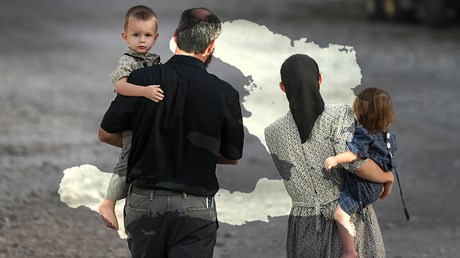
Like many others, we have been following the story of the 12 adults and five children associated with Christian Aid Ministries (CAM) who were kidnapped in Haiti on October 16 and are being held for ransom. The situation is difficult to contemplate, and we join countless individuals around the globe in praying for their release.

Unfortunately, circumstances in Haiti have allowed kidnapping to become all too common, routinely placing the lives of locals—and sometimes those of foreigners—at risk. But although the CAM abduction story fits a sad pattern of sorts, the official response has provoked queries from both religious and secular observers.

The nature and tone of CAM’s public statements and the prayer requests from the captives’ families have surprised many people because they have included prayer for the kidnappers and a desire to extend love and forgiveness to the gang members holding the 16 Americans and one Canadian captive.

Yet these responses did not surprise us. To be clear, we do not personally know any of those being held captive by the gang known as 400 Mawozo, nor are we privy to the private conversations of their relatives. However, the content of the public prayers and the calls to pray for the captives reflect deeply rooted Anabaptist dispositions that we believe the wider Christian community would find both surprisingly familiar and thought provoking.

From Ohio to the world

CAM is a relief and service organization supported by many churches on the more conservative side of the contemporary Anabaptist spectrum—plain-dressing traditionalist Mennonites, Amish-Mennonites, Dunkard Brethren, and not a small number of Old Order Mennonites and Amish. Along with Mennonite Central Committee ...

Continue reading...


from Christianity Today Magazine https://ift.tt/317IH9n

Should Christians Participate in the Day of the Dead?

The Mexican holiday is more prominent than ever. Three evangelicals who’ve seen Día de los Muertos up close weigh in.

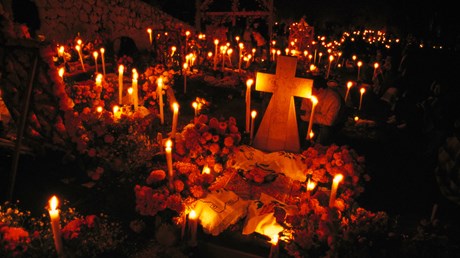
El Día de los Muertos, translated as the Day of the Dead, is a Mexican holiday also celebrated in many US communities. It has roots both in the Catholic observances of All Saints’ and All Souls’ Days and in indigenous Mexican beliefs about the dead.

According to the ancient religion of Mexico, Day of the Dead traditions help the spirits of the dead return to their families, keeping them happy and forestalling the difficulties the dead could inflict on the living. Celebrations vary by region, but they have much in common: altars with offerings to dead relatives, skull-shaped sugar candies, marigolds, incense, votives, and food; candlelit cemeteries; tissue-paper cutouts; and calaverita (“little skull”) decorations everywhere.

CT asked Christians who’ve been in ministry in places where the Day of the Dead is celebrated, “Can Christians participate in good conscience? If so, how?”

Sally Isáis (Mexico City, Mexico): Christians shouldn’t participate at all, given the nature of the holiday.

Every mid-October before the Day of the Dead, my parents would receive a note from my Mexico City school saying, “If your daughter does not bring her part for the classroom offering, she will flunk civics class.”

My mother would say, “I am sorry, but as evangelical Christians, we cannot be part of this celebration, even if it means Sally will not pass the course.” She would then ask the teacher if there was any way that I could make up for not participating. Some years I flunked the course, and other years I was allowed to present another project. My peers were always upset that I would not do my part to decorate the class altar to the dead. My children had similar ...

Continue reading...


from Christianity Today Magazine https://ift.tt/3BvHoO6

Should Christians Participate in the Day of the Dead?

The Mexican holiday is more prominent than ever. Three evangelicals who’ve seen El Día de Los Muertos up close weigh in.

El Día de los Muertos, translated as the Day of the Dead, is a Mexican holiday also celebrated in many U.S. communities. It has roots both in the Catholic All Saints’ and All Souls’ Days and in indigenous Mexican beliefs about the dead.

According the ancient religion of Mexico, Day of the Dead traditions help the spirits of the dead return to their families, keeping them happy and forestalling the difficulties the dead could inflict on the living. Celebrations vary by region, but they have much in common: altars with offerings to dead relatives, skull-shaped sugar candies, marigolds, incense, votives, and food; candlelit cemeteries; tissue-paper cutouts; and calaverita (“skull”) decorations everywhere.

CT asked people who’ve been in ministry in places where the Day of the Dead is celebrated, “Can Christians participate in good conscience? If so, how?”

Sally Isáis (Mexico City, Mexico): Christians shouldn’t participate at all, given the nature of the holiday.

Every mid-October before the Day of the Dead, my parents would receive a note from my Mexico City school saying, “If your daughter does not bring her part for the classroom offering, she will flunk civics class.”

My mother would say, “I am sorry, but as evangelical Christians, we cannot be part of this celebration, even if it means Sally will not pass the course.” She would then ask the teacher if there was any way that I could make up for not participating. Some years I flunked the course, and other years I was allowed to present another project. My peers were always upset that I would not do my part to decorate the class altar to the dead. My children had similar experiences when they ...

Continue reading...


from Christianity Today Magazine https://ift.tt/3Gzk7yv

Thursday, October 28, 2021

We Need a Savior More Than a State

A Christian nation is not worth giving up Christ himself.

Years ago, a Roman Catholic friend lamented to me that he had to go to an evangelical church to hear “good old blood hymns.” He found it inconceivable that a church structured around the real presence of the body and blood of Christ in the Mass would be so reluctant to sing about blood.

He shared, though, that it was getting harder even at evangelical churches to hear bloody music. “Your churches get successful enough where they find it gauche to sing about being washed in blood, so they go with songs more spiritual and abstract,” he said. “But when you find the poor and the hurting evangelicals, that’s where you hear it: power, power, wonder-working power, in the blood of the Lamb.”

He said, “I know you all want to reach people—but it seems to me, when you’re choosing between comfort and blood, too many of you are making the wrong choice.”

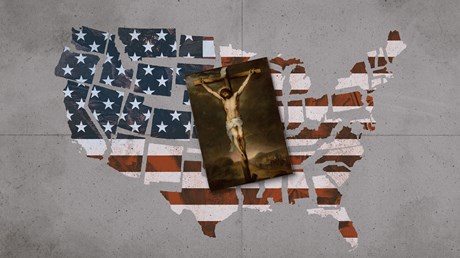
I think of that conversation often when I think of the way many of us have grown alarmed by what’s sometimes called Christian nationalism—either in its more common and less virulent strain of “God and country” civil religion, or in the more explicit and terrifying ways we have seen Christian symbols co-opted by demagogic and authoritarian ethnocentric or nationalist movements.

Yes, this degrades the credibility and witness of the church. It grants delegated legitimacy to what the Bible itself denounces, and it turns the church into a captive servant to what can only be called an idol. What we often miss, though, is that what these nationalistic movements trade away is blood.

There’s a reason we see an American church riven apart by resurgent heresy trials. These inquisitions are far less likely ...

Continue reading...


from Christianity Today Magazine https://ift.tt/31fFTr7

Jesus Loves the Brown Pop-Eyed Atewa Slippery Frog

In Ghana, the church is at the center of a bold new conservation effort.

Caleb Ofori-Boateng, a 39-year-old Ghanaian herpetologist, laughs at the idea that he might be a modern-day Noah.

But his life’s purpose has something in common with the famous figure from the Book of Genesis.

Take the new species of small, brown, pop-eyed frog with tiny teeth and a shrill voice that he and some colleagues just described in a scientific journal.

The entire population of the Atewa slippery frog is thought to live in just five clear-running streams in Atewa, a wildlife-rich evergreen forest on a mountain range north of the Ghanaian capital Accra.

But the area is threatened by government-backed plans to mine for bauxite, used to make aluminum. Should they go ahead, mining will likely destroy the forest and kill off the frogs.

Ofori-Boateng and his colleagues at Herp Conservation Ghana, a group he founded, plan to remove some of the frogs and breed them in captivity—in an “amphibian ark”—until it’s safe for them to return to their natural habitat.

“I feel that God is in what I do. And saving species is a godly thing to do,” he said.

Saving species, especially frogs, is what Ofori-Boateng has been doing for the past 15 years, with the support of the church and a strategy he calls “conservation evangelism.” It started among communities near the Atewa Forest.

As a new science graduate and the country’s first locally trained herpetologist working in Atewa in 2006, Ofori-Boateng yearned to share his experiences and discoveries with communities living at the foot of the hills. With no funds to organize meetings, and as a Christian
himself, he turned to the churches.

Ofori-Boateng was not a public speaker, but he trusted God would help him. He made a commitment ...

Continue reading...


from Christianity Today Magazine https://ift.tt/3jJSSHI

Lebanon’s Christians Resist Exodus from Worst Economic Collapse in 150 Years

Their middle-class salaries now worth peanuts, evangelicals struggle to maintain a faithful presence amid debate over serving God elsewhere.

In 2019, as Lebanon witnessed an unprecedented uprising against its entire political class, evangelical sermons grappled with applied theology:

Whether to join in for justice or honor the king.

Two years later, amid an economic collapse the World Bank says is the worst in 150 years, Lebanese Christians face an even greater pastoral challenge:

Whether to stay and help or escape abroad.

The nation has largely made up its mind.

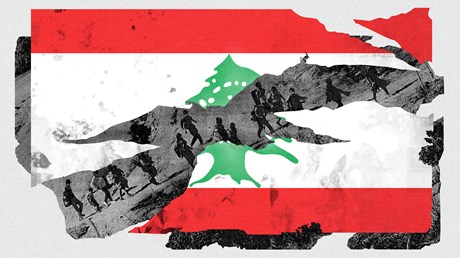
Estimates indicate as many as 380,000 people have left Lebanon. Every day witnesses another 8,000 passport applications. Food prices have increased 557 percent since the uprising, as the inflation rate has now surged past perennial basket cases Venezuela and Zimbabwe.

Once featuring an economically vibrant middle-class, Lebanon now has a poverty rate of 78 percent. The minimum wage of $450 per month has devalued to a mere $33.

“Ask first: Where can I love the Lord, obey the Lord, and serve the Lord—me and my family?” Hikmat Kashouh, pastor of Resurrection Church Beirut, preached in his recent sermon.

“Praying faithfully, we may come up with different decisions.”

Kashouh urged people not to emigrate easily, to seek counsel with church leaders, and to help the suffering whether they stay or leave.

Fellow evangelical pastor Walid Zailaa, however, was blunt in his assessment.

“Your presence is important. How can we enact God’s will if you are not here?” preached the pastor of Faith Baptist Church in Mansourieh. “If you want to search for a better life for yourself and your children, it is your right.

“But it says to God: You are not able to provide for me in Lebanon.”

Even the lions and tigers are leaving.

“Lebanon is not ...

Continue reading...


from Christianity Today Magazine https://ift.tt/3mm45Qn

How Ireland Legalizing Abortion Changed the Country’s Pro-Life Movement

Three years after repeal, evangelical leaders navigate pandemic politics to advocate for a more holistic approach.

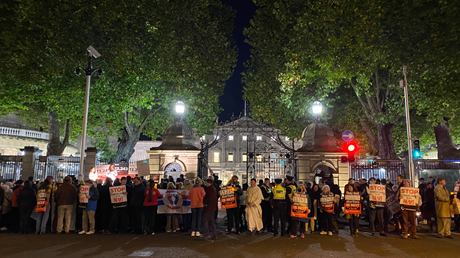
On the first cold autumn evening in Dublin’s City Centre, more than 200 people gathered for a pro-life rally in front of Leinster House, the home of Ireland’s parliament, Dáil Éireann.

In the three years since a national referendum legalized abortion in the country, Christian engagement around the issue has shifted and divided, particularly in the midst of clashing responses to COVID-19.

Now, the country’s abortion law is being reviewed by the Irish government.

Megan Ní Scealláin, a leader with the nondenominational Life Institute, which sponsored last week’s Rethink Abortion rally, said it sent a “message to the Dáil to say that this review must examine the actual facts of the abortion regime. We don’t want a whitewash of reality, and the Irish people deserve an honest appraisal.”

The group is calling for a full assessment of the number of abortions which have taken place since the 2018 law: 13,243, according to official government reports. A mandatory three-year review of Ireland’s abortion laws is set to begin before the end of the year, with some politicians and abortion rights groups advocating for extended access, including the removal of the current three-day waiting limit.

Holding electronic candles and pro-life signs highlighting current abortion rates, demonstrators heard from Christian leaders, politicians, workers at local crisis pregnancy centers, and even the muffled pulse of a heartbeat in utero, through the help of a fetal monitor and microphone.

“It really does my heart good to see everyone out there on this cold night,” Ní Scealláin told the crowd. “We’re not for turning, we’re not for ...

Continue reading...


from Christianity Today Magazine https://ift.tt/3BiDhF2