Thursday, November 4, 2021

Shepherding in a Shifting Financial Landscape

The pandemic intensified existing economic challenges for churches—and catalyzed new ones.

Salem Baptist Church of Chicago got creative with ministry funding in 2020. The predominantly Black megachurch served 15,000 meals to needy Chicagoland residents during the COVID-19 pandemic, funded in part by government grants received through a nonprofit organization affiliated with the church.

Giving from church members held strong, said pastor of ministries Shaun Marshall, but increased ministry necessitated new funding streams. Now with the pandemic continuing to fluctuate, Salem has realized its new funding model probably is here to stay.

Among COVID-19’s lessons: “The church cannot be dependent upon just one stream of revenue,” Marshall said. That is one of several economic changes financial experts see on the immediate horizon for churches. Pastors, they say, should prepare for unique financial challenges over the next two years, driven in large measure by the global pandemic.

Shifting Funding Models

Churches will need more capital over the next two years. Average church size in the US has declined steadily for 20 years, according to new research by the Evangelical Council for Financial Accountability (ECFA). “As attendance goes down, per-capita costs go up,” said Warren Bird, ECFA senior vice president of research and equipping.

Additionally, many churches face deferred maintenance because they focused limited resources in 2020 on keeping staff employed. New technology costs abound too, Bird said, “as almost every church has added an online campus or otherwise increased its digital presence.”

These financial needs have led churches “to get creative and innovative” with money, Marshall said. Some congregations have explored how to run businesses as a second stream of ...

Continue reading...


from Christianity Today Magazine https://ift.tt/3BGzoK9

God Loves a Persistent Pray-er

He’s not offended when we ask, ask, and ask some more.

Each week is full of crises—in the world, in the church, and often in our own families. It’s natural to wonder: How should I have been praying about that? As Christians, we dream of having a prayer life that is fervent, fruitful, and on top of things. But so often, we end up dwelling on the prayers we neglected to pray and wondering if God is disappointed with our lack of spiritual fervor.

For the anxious or hesitant prayer, the pointed two-word title of J. D. Greear’s latest book—Just Ask—offers both a reassurance and an exhortation. The word just conveys the childlike simplicity of prayer. Don’t worry about getting your phraseology just right, says Greear, the North Carolina pastor and former Southern Baptist Convention president. Just pray already.

The book’s subtitle describes postures that, in Greear’s opinion, ought to typify our approach to prayer: confident, bold, patient, relentless, shameless, dependent, grateful, powerful, and expectant. But despite the can-do tenor of these words, Just Ask is no lightweight, name-it-and-claim-it pep talk, and Greear takes pains to give reasons why God might decline to answer a prayer.

The book contains seven manageable chapters, arranged into two sections. Greear begins by candidly addressing questions like “Honestly, does prayer do any good?” and “But seriously, why isn’t God answering me?” Then he gets even more practical, mapping out various how-tos and the how-not-tos. And he helpfully closes the book with ten straightforward suggestions.

Readers may flinch, at first, when Greear jabs them with the claim that “instinctively we all pray the wrong way.” But he softens the sting by making sure ...

Continue reading...


from Christianity Today Magazine https://ift.tt/3CN2UiX

Wednesday, November 3, 2021

Army Attacks Continue in Myanmar’s Most Christian State

In a town in the Chin region, government soldiers burned and looted homes and churches.

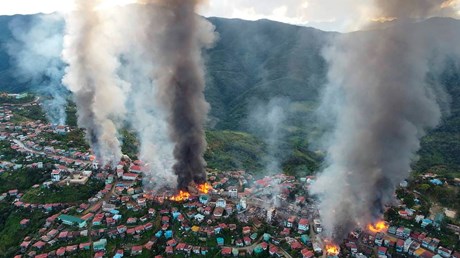
More than 160 buildings in a town in northwestern Myanmar, including at least two churches, have been destroyed by fires caused by shelling by government troops, local media and activists reported Saturday.

The destruction of parts of the town of Thantlang in Chin state appeared to be another escalation in the ongoing struggle between Myanmar’s military-installed government and forces opposed to it. The army seized power in February from the elected government of Aung San Suu Kyi, but has failed to quell the widespread resistance.

The Chin state is a heavily Christian area in the otherwise majority-Buddhist country. Over 90 percent of the ethnic Chin people identify as Christian, many of them Baptists after the history of Baptist missionaries in the region.

A government spokesman denied “nonsense allegations being reported in the country-destroying media,” and blamed insurgents for instigating the fighting and setting the fires.

Human rights groups and UN experts recently warned that the government is planning a major offensive in the country’s northwest, including Chin state, along with the regions of Magway and Sagaing. Residents of the rugged area have a reputation for their fierce fighting spirit, and have put up stiff resistance to military rule despite being only lightly armed with single-shot hunting rifles and homemade weapons.

There were no immediate reports of casualties from the fire, which started early Friday and burned through the night, according to reports.

Dave Eubank, head of the Christian humanitarian service movement Free Burma Rangers, said the attacks against Christian homes and businesses in the area are due to resistance to the regime, rather than targeting a particular faith.

“I ...

Continue reading...


from Christianity Today Magazine https://ift.tt/3GKrqnj

Reaching Youth for Christ During Sudan’s Coup

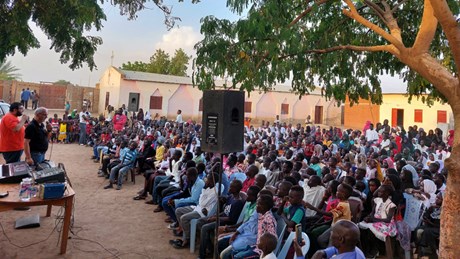
When the military closed Khartoum’s airport and disrupted their discipleship training, a generational odd couple from YFC Lebanon improvised and preached to hundreds of students.

At 6:30 a.m. last Monday, John Sagherian and Elie Heneine went down to the lobby of their three-star hotel in eastern Sudan and found a crowd gathered around a TV. Filtering in, they heard the news.

The military had staged a coup in the capital, Khartoum, 90 miles to the northwest.

“Instantly, everything we planned for that day was up in the air,” said Heneine, a 27-year-old staff worker with Youth for Christ (YFC) Lebanon. “Oh well, youth work is very organic.”

Sagherian, the 74-year-old YFC regional director, had long been “dying to visit” Sudan. Two years earlier, he had identified a promising country director named Sabet, who since then had recruited seven other volunteer staff members. Sabet even ignored the capital, concentrating instead on the poorer hinterland.

The Lebanese team of two were finally scheduled to meet their new Sudanese colleagues later that day. As malaria had been among their concerns, they had taken 100 mg of medication every day for two weeks prior. The visa had also been a complication, requiring multiple layers of bureaucracy. But it was the BBC app that now troubled Joy, Heneine’s American wife of five months, as Sudan increasingly filled her news feed.

Heneine himself was at peace. Not only was he used to instability as a Lebanese Christian, but Sabet and others assured them everything was fine—despite the political tumult between the once-cooperating military and civilian leaders.

In 2019, the Sudanese army backed massive protests to overthrow 30-year dictator Omar al-Bashir. A spate of religious freedom reformsreplaced his Islamist governance, normalization agreements were signed with the nation’s former enemy Israel, and the US removed Sudan ...

Continue reading...


from Christianity Today Magazine https://ift.tt/3GMxUSm

Tuesday, November 2, 2021

Quotations on Prayer that Stir the Soul

Insights from Augustine, Teresa of Avila, Martin Luther, and more.

For the highest prayer is to the goodness of God, and that comes down to us in our lowest need. It quickens our soul and gives it life, and makes it grow in grace and virtue. It is nearest in nature and readiest in grace; for it is the same grace which the soul seeks and always will.
—Julian of Norwich, Revelations of Divine Love

I make it my business only to persevere in his holy presence, wherein I keep myself by a simple attention, and a general fond regard to God, which I may call an actual presence of God; or, to speak better, an habitual, silent, and secret conversation of the soul with God.
—Brother Lawrence, The Practice of the Presence of God

If our presence is dripping with Christ, it will drip with alluring power and also cause demons to flee.
—Marlena Graves, The Way Up Is Down

O Jesus, you who suffer, grant that today and every day I may be able to see you in the person of your sick ones and that, by offering them my care, I may serve you. Grant that, even if you are hidden under the unattractive disguise of anger, of crime, or of madness, I may recognize you and say, “Jesus, you who suffer, how sweet it is to serve you.”
—Mother Teresa, In the Heart of the World, edited by Becky Benenate

So starting today, we craft a prayer strategy with peace in mind, leading to peace of mind for ourselves and the ones we love.
—Priscilla Shirer, Fervent

When we pray we must hold fast and believe that God has heard our prayer. It was for this reason that the ancients defined prayer as an Ascensus mentis ad Deum, “a climbing up of the heart unto God.”
—Martin Luther, Table Talk, featured in Devotional Classics edited by Richard J. Foster and James Bryan Smith

Eternal ...

Continue reading...


from Christianity Today Magazine https://ift.tt/2ZSCkqb

Ministries Help Job Seekers Find a Paycheck with a Purpose

After losing shift work and blue collar jobs during shutdowns, Christians are thinking more carefully about the work of their hands as they reenter the marketplace.

No one dreams of seeking work after retirement, but sometimes a pension isn’t enough. West Virginian Henry Shinn, 61, found himself there last year as the COVID-19 pandemic wracked the nation.

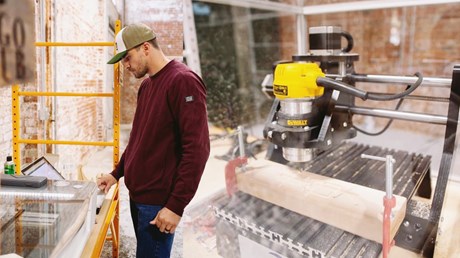
With nothing but an unlikely product design brewing in his mind, he approached Crea Company—a faith-based organization that works with creators to bring their ideas to life.

Within months, Crea Company had helped him formulate a plan and secure the machines and materials necessary to launch West Virginia Trail Chips. The company produces durable wooden tokens in the form of unique, collection-worthy business cards. Shinn now earns a steady income from his part-time business, working from home and creating his products in the Crea workshop for an affordable monthly fee.

Crea’s mission-based framework to provide a “future that inspires hope” for West Virginians is one example of how Christians are helping one another through unsteady economic times and job difficulties.

Bonus? It comes with the perk of built-in coworkers. Fellow creators, who also believe in the Christian mission of the local “makerspace,” are there to ask questions, give advice, and offer direction.

“You are just more apt to be friendly and helpful in that kind of environment,” Shinn said in an interview with Christianity Today.

Crea cofounder Travis Lowe, who also pastors Crossroads Church in Bluefield, West Virginia, saw interest rise soon after the pandemic spawned. After starting Crea in 2019, its purpose shifted to meet the community’s needs as the pandemic hit.

“Our original model,” said Lowe, “was to offer community groups [the opportunity for] maker classes—like, come make a doormat ...

Continue reading...


from Christianity Today Magazine https://ift.tt/3BQdepb

With Pandemic Tithes Up, Churches Pay Back Millions in Stimulus Funds

It’s not just Lakewood. So far, 99 Christian orgs have repaid their Paycheck Protection Program loans.

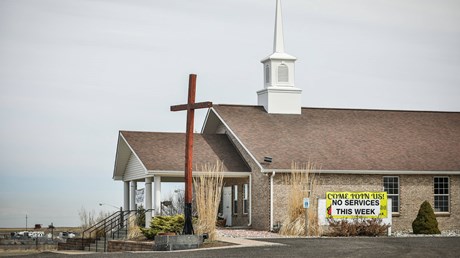
When Michigan’s governor required churches to stop meeting in person on March 16 last year, Kenton Sanders, director of operations at Mars Hill Bible Church, quickly did some worrying math.

About 40 percent of donations to the megachurch in Grandville, Michigan, came during in-person services that drew some 1,750 adults, students and children weekly. With in-person services shutting down, donations would surely tumble. If that happened, the church would have to lay off some of its staff.

“It was at the beginning of the pandemic, we had just gone online, and had no idea what was going to happen,” he said.

So, like more than 120,000 churches and other religious organizations nationwide, Mars Hill applied for help through the Paycheck Protection Program, the emergency loan program created by the CARES Act, a $2.2 trillion relief and stimulus package passed by Congress in March 2020. Under the PPP, the Small Business Administration would funnel funds to local banks, which would make loans to employers in their communities.

Mars Hill’s $295,000 loan, approved on April 14, 2020, would protect two dozen jobs at the church, at least for a few months.

But within a month after the loan was approved, Sanders noticed that giving had actually gone up. In addition to regular offerings that came in online, church members also contributed to a benevolence fund, known as “the white bucket project,” to help neighbors in need during the pandemic.

After talking with other Mars Hill leaders, Sanders called up the bank and returned the entire amount of the loan.

Mars Hill is one of a small number of religious organizations that took out large PPP loans only to return the funds without ever withdrawing a penny or to ...

Continue reading...


from Christianity Today Magazine https://ift.tt/3GJRRJF