Wednesday, March 2, 2022

When We Survey the Wondrous Cross

Lent invites us to gain perspective by facing our mortality.

In 2013, Paul Kalanithi was completing his medical residency and was on his way to becoming a neurosurgeon at Stanford University when he was diagnosed with stage IV lung cancer. He’d just turned 36. Kalanithi began to write, and his memoir was eventually published as the book When Breath Becomes Air. In it, he recites words his oncologist and friend Emma Hayward shared with him as he reckoned with his impending death: “This is not the end. Or even the beginning of the end. This is just the end of the beginning.”

Kalanithi died in 2015. He was raised in a Christian home, eventually strayed from faith, but seems to have found God again during his final years. Hayward’s words ring resolutely true in light of the gospel. For followers of Jesus, death is not the end, or even the beginning of the end. It is simply the end of the beginning and the beginning of eternity.

While most Christians intellectually believe this to be true, our avoidance of death and even the talk of death seems to betray that belief. This is in part because, as anthropologist Anita Hannig observes, “In the United States the end of life has become so medicalized that death is often viewed as a failure, rather than as an expected stage of life.” We’ve been conditioned, in large part by our cultural fixation on pleasure, to ignore, deny, and even try to subvert death. As a result, we fail to ponder, deeply consider, and look upon it. We forget the psalmist’s reminder to “number our days” (Ps. 90:12), a call to reckon with our own limitations and the finitude of this life.

The journey toward Easter Sunday always begins with Ash Wednesday, when we remember that we are dust and will one day die. Before ...

Continue reading...


from Christianity Today Magazine https://ift.tt/vXGu9OT

Died: Gary North, Who Saw Austrian Economics in the Bible and Disaster on the Horizon

The prolific writer promoted Christian Reconstructionism, libertarian Ron Paul, the gold standard, and fears of Y2K.

Gary North, a leading Christian Reconstructionist who argued for the biblical basis of free market economics and urged people to prepare for societal collapse, has died at 80.

North was a prolific writer, simultaneously penning a 31-volume Bible commentary on Austrian economics; turning out regular warnings about financial catastrophe; and firing off a seemingly endless stream of columns on the gold standard, government overreach, God’s covenants, and the greatness of libertarian Ron Paul.

He was perhaps most mainstream when he supported Paul’s longshot presidential bid in 2012. He boosted the candidate throughout the Republican Party primaries, alternately explaining monetary policy to newly converted libertarians and hyping the chances that the Texas politician could actually win the White House.

He was most well-known, though, for his warnings about Y2K. North was convinced that a computer programing shortcut—coding years with two digits instead of four—was going to lead to catastrophic crashes when the year 99 became the year 00 and the world’s digital infrastructure reset itself. He eagerly—even gleefully—heralded the collapse of civilization and coached Christians on how to stockpile food, gold, and guns.

For his part, North thought his most important work and true calling was explaining how the alternative economic theories of Ludwig von Mises and Murray Rothbard (both nonpracticing Jews) were deeply biblical. Free market economics should be grounded, he believed, in the Bible’s account of God’s covenants, the scarcity that follows the Fall, and the divine mandate in Genesis 1:28 that people should take “dominion” over the earth (KJV).

North conceived his ...

Continue reading...


from Christianity Today Magazine https://ift.tt/cUGNwdx

We’re Not Mad Enough at Death

Dying is a fact of life. It’s also the enemy we’re called to resist.

I’ve never seen so many headlines about death.

Over the past two pandemic years, newspaper obituary sections grew fat with tributes, and my online feeds—keyed up to search for terms like pastor and minister—were filled with local news stories about churches who lost their leaders during the pandemic.

The death tolls we’re reaching now are the worst-case scenarios we couldn’t even imagine when COVID-19 first hit. As the United States commemorated 800,000 dead in late 2021, The Atlantic writer Clint Smith called it a number “so enormous that we risk becoming numb to its implications.”

There’s a sense of resignation in the way people, even fellow Christians, speak of the COVID-19 dead. Depending on their positions on vaccination, they may suggest that the unvaccinated put themselves at risk, or, on the other side, that it simply must have been their time to die.

On Ash Wednesday, Christians traditionally repeat a line aimed to remind each other of our mortality, that we will all die and “to dust we shall return.” We hardly need the reminder in the midst of a pandemic that has taken more than 5.7 million lives around the world.

It would be hard for that level of loss to not shift our conception of death, or move it further in the direction it was already headed.

We have seen a creeping fatalism toward the critically ill. The medically vulnerable have too often been reduced to their COVID-19 “risk factors” and “comorbidities,” as if such conditions justify another life lost.

Governments around the world are moving toward policies to sanction euthanasia. In Australia and the UK, politicians are lobbying to legalize “assisted dying,” and Switzerland ...

Continue reading...


from Christianity Today Magazine https://ift.tt/4bOgrTw

Tuesday, March 1, 2022

Ash Wednesday in a Time of War

Putin's denial of death reminds Christians why we serve a Lord who conquered the grave.

This piece was adapted from Russell Moore’s newsletter. Subscribe here.

Early in the Russian invasion of Ukraine, some longtime observers of Vladimir Putin speculated that he might soon use what he did before: mobile crematoriums.

These incinerators aren’t for the combatants killed on the other side but for the bodies of Putin’s own troops. Such ghoulish machines would be employed to hide the number of fatalities to avoid humiliation abroad and loss of support at home.

Regardless of whether these experts’ predictions are right, Putin’s impulse is to hide what his invasion will bring for Russian armies: death.

As Christians around the world mark Ash Wednesday, perhaps we can remember that the Christian way of death is opposite of this invading tyrant’s. For both Christians who observe the church calendar and those who don’t, this Ash Wednesday may be especially poignant this year.

Many of us are only just now catching our breath after two years of a pandemic that has killed countless people and upended the lives of everyone who survived it. And on all our television screens and social media feeds are images of brave Ukrainians holding their own against those invading their homes and communities.

In the backdrop of all this are possibilities we almost dare not even mention: a war spreading all across Europe or even, given the evident instability of the Russian dictator, the prospect of nuclear war.

Putin operates out of what intelligence services and diplomats tell us is a nostalgia for the old superpower days of the Soviet Union. To do this, he projects an image—the shirtless warrior riding a horse, for example. The last thing he wants the world to see is the corpses of Russian soldiers. ...

Continue reading...


from Christianity Today Magazine https://ift.tt/u4JrRsD

SCOTUS Won’t Weigh Whether Christian College Profs Are Ministers—For Now

A lawsuit against Gordon College will go forward in Massachusetts but four justices say the court will eventually have to clarify the “ministerial exception.”

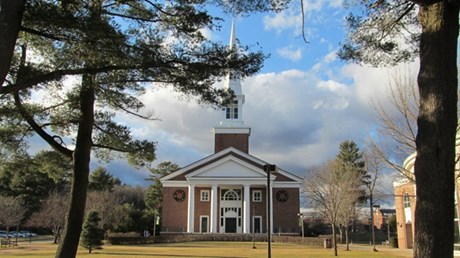
At some point, the US Supreme Court will have to consider whether Christian college professors are legally ministers, and who decides that, and how, Justice Samuel Alito said in a statement on Monday.

But the case of a former social work professor suing Gordon College for denying her promotion is not quite right for those arguments—at least for now.

The court turned down Gordon’s appeal to have Margaret DeWeese-Boyd’s lawsuit dismissed based on the “ministerial exception,” which says that clergy are not protected by employment law, because that would be excessive government interference into religious matters. Alito, however, released a statement saying there are still concerns about how ministers are being defined legally.

“The preliminary posture of the litigation would complicate our review,” Alito wrote. “But in an appropriate future case, this Court may be required to resolve this important question.”

The statement was joined by three other conservative justices—Clarence Thomas, Brett Kavanaugh, and Amy Coney Barrett—signaling an interest in appeals from Gordon or other Christian colleges seeking exemption from antidiscrimination legislation.

For now, however, DeWeese-Boyd’s lawsuit against Gordon College can go forward in state court. She claims the school administration denied her promotion in 2017, against the recommendation of her department and the full faculty, because she critiqued the school’s stance on LGBT issues. Gordon argues it denied her promotion because she hadn’t done enough scholarship. The school also sought to have the case dismissed because it considers DeWeese-Boyd a minister.

Gordon revised its faculty handbook in 2016 ...

Continue reading...


from Christianity Today Magazine https://ift.tt/zTMHVrl

SCOTUS Won’t Weigh Whether Christian College Profs Are Ministers—For Now

A lawsuit against Gordon College will go forward in Massachusetts but four justices say the court will eventually have to clarify the “ministerial exception.”

At some point, the US Supreme Court will have to consider whether Christian college professors are legally ministers, and who decides that, and how, Justice Samuel Alito said in a statement on Monday.

But the case of a former social work professor suing Gordon College for denying her promotion is not quite right for those arguments—at least for now.

The court turned down Gordon’s appeal to have Margaret DeWeese-Boyd’s lawsuit dismissed based on the “ministerial exception,” which says that clergy are not protected by employment law, because that would be excessive government interference into religious matters. Alito, however, released a statement saying there are still concerns about how ministers are being defined legally.

“The preliminary posture of the litigation would complicate our review,” Alito wrote. “But in an appropriate future case, this Court may be required to resolve this important question.”

The statement was joined by three other conservative justices—Clarence Thomas, Brett Kavanaugh, and Amy Coney Barrett—signaling an interest in appeals from Gordon or other Christian colleges seeking exemption from antidiscrimination legislation.

For now, however, DeWeese-Boyd’s lawsuit against Gordon College can go forward in state court. She claims the school administration denied her promotion in 2017, against the recommendation of her department and the full faculty, because she critiqued the school’s stance on LGBT issues. Gordon argues it denied her promotion because she hadn’t done enough scholarship. The school also sought to have the case dismissed because it considers DeWeese-Boyd a minister.

Gordon revised its faculty handbook in 2016 ...

Continue reading...


from Christianity Today Magazine https://ift.tt/HdhKLrQ

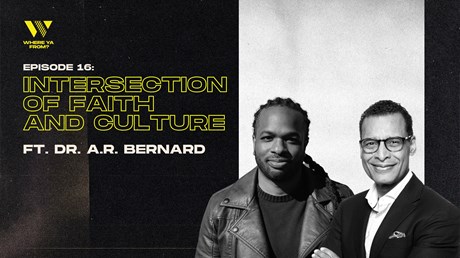
Intersection of Faith and Culture with Dr. A.R. Bernard

Culture informs faith. Faith informs culture.

In this episode of VOICES’ Where Ya From? podcast, Dr. A.R. Bernard teaches us that there are no small churches or small impact—just small thinking. Learn how God took A.R.’s four-member, store-front church and expanded it to the Christian Culture Center and understand that we all can make positive change in our communities by being faithful to whatever plan the Lord has in store for us.

A graduate of Alliance Theological Seminary, Dr. A.R. Bernard is a visionary whose teachings have lifted his church, the Christian Cultural Center (CCC), to become New York’s largest house of worship. In addition, he has been awarded Honorary Doctor of Divinity degrees from Wagner College and from Nyack College/Alliance Theological Seminary. His wife, Karen, left her career with the Queens County Supreme Court to raise seven sons and copastor with her husband. Together, they have successfully experienced 48 years of marriage and 42 years of ministry.

Continue reading...


from Christianity Today Magazine https://ift.tt/eiZOkrs