Wednesday, August 3, 2022

With an Eye to Mission and Money, More Evangelical Universities Go Green

New financing mechanisms reduce the cost of reducing emissions.

There are two reasons to put solar panels on the roofs of Calvin University.

One, renewable energy can provide power for the private Christian campus in Grand Rapids, Michigan, without adding to the atmospheric concentrations of carbon dioxide, methane, chlorofluorocarbons, and nitrous oxide that are driving climate change.

Two, it will save the school some money.

At Calvin, the environmental reason is primary. The budgetary help is a bonus.

“I think taking care of the planet is a prerequisite to being a Christian,” Tim Fennema, vice president for administration and finance, told CT. “And as a Christian university, it’s something we want to do.”

Calvin is on a mission to be carbon neutral by 2057. The school got a little closer last month when it announced a partnership with the Indiana-based Sun FundED to come up with a plan to install solar arrays on university buildings, offsetting the high-carbon energy sources Calvin currently uses to heat, cool, and power the campus.

Solar panels on top of the buildings will be a visible sign to the Calvin community that they’re taking environmental concerns seriously, according to Fennema.

That sign is economically feasible because of advancements in the financing of renewable energy projects. Calvin won’t have to go into debt or ask donors to raise the funds for alternative energy. Sun FundED, a private company backed by venture capital, is a tax-equity investment. It will provide the solar power array to Calvin with no upfront costs and then leverage tax credits that aren’t available to the nonprofit educational institution.

“It allows us to do it on a larger scale on campus than we could have ever done by ourselves,” Fennema said. ...

Continue reading...


from Christianity Today Magazine https://ift.tt/fkYA3Rb

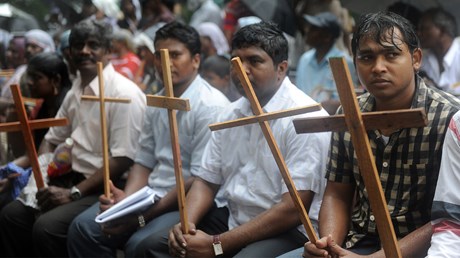
Dalit Christians Fill the Indian Church’s Pews. Not Its Pulpits.

Persistent caste discrimination holds believers from India’s most vulnerable community back.

Prem Chand has led a church for Dalit and non-Dalit Christians in India’s most populous state of Uttar Pradesh for years. But despite his title and experience, he’s learned one painful lesson over and over.

“A Dalit always stays a Dalit, an outcast, even if he is educated or has a good economic status,” he said. “Both believers and nonbelievers do not respect a Dalit pastor as they would a high-caste Hindu convert pastor.”

Despite making up a significant number of the Christian population—both Catholic and Protestant—Dalit Christians have historically been shut out from church leadership. As Chand knows firsthand, many Christian Dalits face persistent caste discrimination in their congregations. Outside the church, the government denies them affirmative action benefits available to Hindu Dalits, keeping millions of believers stymied in poverty and shut out from formal education.

To this day, Christians from different castes worship in different locations and bury their dead in separate graveyards in some Southern Indian congregations. Dalit believers face less overt discrimination in the northern and central parts of the country, if only because many Christians in these regions are from the Dalit or Tribal background themselves. Yet a discriminatory line remains, even though some parts of community life are shared.

“For generations people have been living following the set rules of caste, and it does not leave an individual even after they start to follow Christ,” said Chand. “Even after many years of faith and associating superficially with Dalits, when it comes to marrying their children, high-caste Christians will search for brides and grooms who belong to ...

Continue reading...


from Christianity Today Magazine https://ift.tt/GPcMeLa

Just Laws Alone Won’t Save Us

In this polarized moment, strong legislation isn’t a substitute for wise and discerning leaders.

This month, the United States Senate is considering a bill to protect same-sex couples’ right to marry. Seven years have passed since the historic Obergefell decision, so these initiatives might look like grandstanding or redundant efforts. But in late June, the Supreme Court overturned the 1973 Roe v. Wade ruling, hinting at the possibility of revisiting other cases.

The Dobbs ruling unleashed a flurry of legislation, as lawmakers rush to codify questions that had previously been settled through the courts. While Democrats at the federal level are working to enshrine same-sex marriage, Republicans in conservative states are working to restrict and prohibit elective abortion.

A political environment that didn’t seem like it could get any more polarized suddenly has.

The swell of policy initiatives has also highlighted the need for discerning leaders—those who know not just how to win elections and judicial seats but how best to rule. Leaders like King Solomon.

Solomon assumes the throne of Israel after a season of political instability that included an attempted coup, a contested transfer of power, a political rival refusing to concede defeat, family drama, and hefty doses of palace intrigue. According to 2 Chronicles 1:1, Solomon eventually “strengthen[s] his hold on his kingdom” (CSB).

But once in power, he faces a new dilemma and asks himself: Once I secure the ability to reign, how should I reign? Once I gain power, what do I do with it?

Rather than lean on his own understanding, Solomon seeks the face of God, offering burnt sacrifices to inquire before the Lord. In response, God promises to grant him whatever he wants. Solomon famously asks for wisdom and knowledge:

Now, Lord God, let your promise ...

Continue reading...


from Christianity Today Magazine https://ift.tt/uWacgHm

Tuesday, August 2, 2022

Many White Southern Evangelicals Are Now Lapsed Churchgoers

Data suggests that, when their attendance drops, these nominal Christians become hyper-individualistic, devoted to law and order, cynical about systems, and distrustful of others.

What happens to American politics and culture when white Southerners in the Bible Belt quit attending church? What religious views do they adopt? How do they vote? And will the mass exodus from church that already seems to be occurring in the South make the country less politically polarized—or more?

These questions are particularly relevant this summer because of two major news developments: the sex abuse crisis in the Southern Baptist Convention and the reversal of Roe v. Wade, which led to state restrictions that made abortion almost completely illegal the South and Midwest.

Twenty years ago, revelations of the Catholic church’s sex abuse crisis accelerated a massive exodus of white northeastern Catholics that was already well underway, and it contributed to a secularization of New England culture and politics. A region that up until the late 20th century had some of the nation’s strictest policies on abortion and divorce became a leader in expanding abortion access and legalizing same-sex marriage.

The same phenomenon occurred more recently in Ireland, in the wake of that country’s clerical sex abuse crisis. A nation that had some of the highest church attendance rates and strictest abortion and marriage policies in Europe legalized both abortion and same-sex marriage, even as church attendance rates plummeted.

It might be easy to imagine, then, that something similar could occur in the southern Bible Belt. As in New England immediately before news of the Catholic church’s sex abuse crisis broke, church attendance rates in the South were already falling before the SBC crisis was fully publicized.

Already, 30 percent of Southern Baptists “seldom” or “never” attend church, ...

Continue reading...


from Christianity Today Magazine https://ift.tt/EnrzflX

This Side of Eden, the Ideal Bookstore Doesn’t Exist

As a longtime Christian bookseller, I figured I’d enjoy a fellow bookseller’s ode to browsing, buying, and reading. Here’s why it left me feeling conflicted.

When the book In Praise of Good Bookstores released earlier this year, I started hearing from bookish friends and customers of Hearts & Minds, the Pennsylvania bookstore my wife and I have run together for almost 40 years. They would send us links to an interview with the author, Jeff Deutsch, a bookstore manager himself.

For many, the conversation evoked memories and hopes of one of the great pleasures this side of Eden: browsing a well-stocked and interesting bookstore. Naturally, as a longtime bookseller, I shared the interview and devoured the book. But I’ll admit that Deutsch’s perspectives made me a bit uneasy, and I am still trying to decipher my curious reaction toward a book most friends figured I’d commend unreservedly. This side of Eden, few things are as simple as they seem.

Scale and status

In Praise of Good Bookstores gives a fascinating account of a former Jewish kid who grew up to love books and bookselling, and Deutsch waxes eloquent about the joy of connecting book and reader. He offers an intellectually stimulating essay that will appeal to those who like books about books, the reading life, and publishing-world curiosities.

For many CT readers, In Praise of Good Bookstores would no doubt fit seamlessly alongside such titles as Karen Swallow Prior’s On Reading Well, Alan Jacobs’s Breaking Bread with the Dead, Jessica Hooten Wilson’s The Scandal of Holiness, and Claude Atcho’s Reading Black Books. Deutsch is as learned as any of those authors, and his obvious passion for books is contagious.

What makes Deutsch’s book stand out (despite an oddly tacky cover) is his status as a bookseller. Like the best of our trade, he is mostly self-taught and exceedingly eclectic ...

Continue reading...


from Christianity Today Magazine https://ift.tt/G4tkPHu

Monday, August 1, 2022

Ron Sider Was the Real Deal

As a friend of the late seminary professor, I saw up close his deep character and life-long care for the disenfranchised.

For 15 precious years, Ron Sider was my colleague at Palmer Seminary of Eastern University, just outside of Philadelphia. One of the most passionate voices for defending the vulnerable, he broke negative stereotypes of evangelicals—as well as some conservative evangelicals’ negative stereotypes of social justice.

I first heard of Ron when New Testament scholar Gordon Fee declared that Rich Christians in an Age of Hunger was one book every North American Christian should read.

Gordon was not given to exaggerated book endorsements, so as a college student, I saved up my coins and bought a used copy. I had recently been reading 40 chapters of the Bible a day, so I was very familiar with the book’s recurrent message about caring for the poor. As I read Rich Christians, I was struck: Here was an author who genuinely paid attention to Scripture’s emphasis on this theme.

Eventually, I discovered that Ron also advocated for racial justice and challenged apartheid, even at a time when those stances were still controversial among many white evangelicals in the United States.

Ron was always ready to learn. His commitment was not to a specific economic theory but rather to helping people in need. In that spirit of humility, he adjusted his approach to particular economic solutions in revised editions of Rich Christians. His PhD was in Reformation history, not global economics.

I knew less about economics than he, so I wouldn’t have known the difference had he not told me later why he made the revisions. His initial approach to economics needed adjustment, he told me, but still, he hoped people would remember that he and his colleagues were right about apartheid.

Some of the more extreme ...

Continue reading...


from Christianity Today Magazine https://ift.tt/HcCh2IV

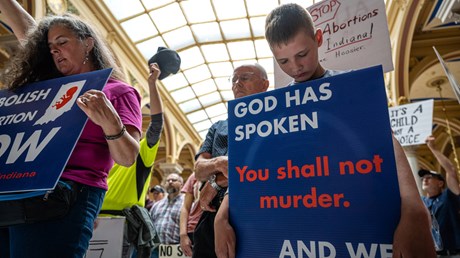
When ‘Pro-Life’ Isn’t Enough: Abortion ‘Abolitionists’ Speak Up

Most Christians in the movement disagree with a vocal minority that pushes to criminalize women and opposes legal measures short of outright bans.

The overturning of Roe v. Wade has brought new attention to a small but growing group of pro-life Christians who identify as “abortion abolitionists.”

This vocal minority rejects incremental steps toward outlawing abortion and reserves strong criticism for those who accept anything other than a federal ban equipped with criminal penalties for all involved.

“The very foundation of the gospel is the law of God,” said Tom Ascol, the president of Founders Ministries, in a recent documentary from abolitionist group End Abortion Now. “God defines what’s sin: You shall not murder. And that’s true from the moment of conception until the natural ending of life.”

Ascol is also a pastor who ran for president of the Southern Baptist Convention (SBC) in June. For two years in a row, abolitionists like Ascol spoke up at the SBC’s annual meeting to push the denomination to take an abolitionist stance.

In 2021, they proposed a rigid resolution for “immediate abolition of abortion without exception or compromise.” It passed only when amended to allow for an “incremental approach,” the opposite of what they wanted. This year’s proposal was not brought for a vote, though several pastors criticized the SBC’s Ethics and Religious Liberty (ERLC) Commission’s campaign to make abortion not just illegal but “unthinkable.”

The move to entirely abolish abortion, rather than cut back or adjust laws to restrict the procedure, is inspired by slavery abolitionists like William Wilberforce, who was monumental in ending Britain’s participation in the slave trade in 1807. As a whole, many pro-lifers (not just abolitionists) view abortion as parallel ...

Continue reading...


from Christianity Today Magazine https://ift.tt/ZvQsKAD