Wednesday, October 5, 2022

Bring Back Altar Calls

They could foster the worst in evangelical spirituality. But the best of it, too.

“Every head bowed and every eye closed.” If you recognize those words, you probably grew up in a church much like the one I did, where every worship service ended with an altar call or an invitation hymn. The pianist or organist played “Just As I Am” or “Softly and Tenderly” while those wanting to profess faith in Christ, rededicate their lives, or seek prayer could slip out of their pews and walk down the aisle to the front of the sanctuary.

The altar call is out of step with almost every sector of American Christianity right now, and it’s easy to see why. After all, an altar call can, at its worst, represent our key vulnerabilities as evangelicals, such as the confusion of an emotional experience with the gospel. How many nominal Christians in America, with hearts just as once-born as ever, have reassured themselves that they “prayed the sinner’s prayer”?

These practices also can appeal to our weakness for the quest of bigness, with pastors judged each week by how many people went forward. And an altar call can represent our tendency to be drawn toward novelty and away from the history and liturgy of the church.

Growing up, I almost assumed that altar calls were happening at the Council of Nicaea, or that Augustine of Hippo filled out a card noting his profession of faith (though he kind of did). I was a bit startled to learn that the invitation hymn the way I knew it—though rooted in older forms of revivalism—was mostly influenced by the Billy Graham crusades of the startlingly recent mid-20th century.

And yet.

In this publication a generation ago, historian Martin Marty argued that evangelical churches of that day were growing at least in part because ...

Continue reading...


from Christianity Today Magazine https://ift.tt/ADWxN1a

Tuesday, October 4, 2022

Evangelical School Strikes Deal with Chick-fil-A

And other news briefs from Christians around the world.

An evangelical school in Georgia has seen a dramatic increase in online enrollment from a cooperative agreement with Chick-fil-A. The owners of the fast-food chicken franchises pay a flat fee that allows all their employees to attend online classes for college credit at Point University. Chick-fil-A then uses that as an incentive to recruit and retain workers. Chick-fil-A CEO Andrew Cathy is on Point’s board, but the arrangement is not with corporate. When the program launched this fall, Point’s online enrollment increased from about 500 to more than 1,200. Sixty-five percent of evangelical colleges have seen enrollment numbers drop since 2014.

United States: Religious objectors to COVID-19 vaccine get $10 million

An Illinois health care system is settling a lawsuit with employees who were denied religious exemptions to COVID-19 vaccines. More than 500 employees requested religious exemptions but were told NorthShore University HealthSystem did not grant them, per a university policy. Nearly 300 resigned or were fired. If the terms of the $10.3 million agreement are approved by a federal court, those who complied with the vaccination requirement to keep their jobs will receive about $3,000 each, while those who lost their jobs will get around $25,000. This is the first class action settlement for health care workers claiming discrimination in COVID-19 mandates.

Chile: Problems raised with proposed constitution

A group of evangelical leaders and pastors objected to the proposal of a new constitution in Chile. They say it includes “extreme ideology” and increases division by recognizing 11 different groups while not acknowledging evangelicals. The new constitution would guarantee seats in parliament to ...

Continue reading...


from Christianity Today Magazine https://ift.tt/sk0zynZ

The Woman Who Gave the World a Thousand Names for God

How a British linguist and a failed Nigerian coup changed everything about Bible translation.

In July of 2007, Bible translators from a dozen Nigerian languages came together in the rural town of Bayara, Nigeria, for a three-week workshop to begin translating the Gospel of Luke. They gathered in a steel-roofed school building with a number of outside consultants—some Nigerian, others American and British.

At the end of Friday, July 27, they had wrapped up their first week of work and made plans to unwind. Multilingual collaboration is taxing, and everyone was eager to eat dinner and watch a movie.

The translators gathered their papers, books, and laptops into bags and slung them over their shoulders. One of them grabbed a USB thumb drive attached to a lanyard, which they used to pass files back and forth and store backups of their work.

They walked half a kilometer through the warm evening air to a guest house where they were staying near the local hospital. The cooler rainy season had just begun, but this day had been neither cool nor rainy.

The group finished eating around 7:30, and Veronica Gambo, the wife of one of the translation consultants, made popcorn. She filled a bowl and was carrying it out to join the others in front of the television when men with automatic rifles burst through a door into the kitchen.

Gambo froze. A man put a gun barrel between her shoulder blades and marched her, still bearing the popcorn, into the living room.

“Get down!” Danjuma Gambo, Veronica’s husband, remembers the men yelling. They fired shots into the walls and ceiling. They forced everybody to the ground, including the translation project’s leader, a silver-haired British woman in her late 60s.

Andy Kellogg, an American working as a Bible translation consultant, was lying on the floor and wondering: ...

Continue reading...


from Christianity Today Magazine https://ift.tt/5oR3KcZ

Monday, October 3, 2022

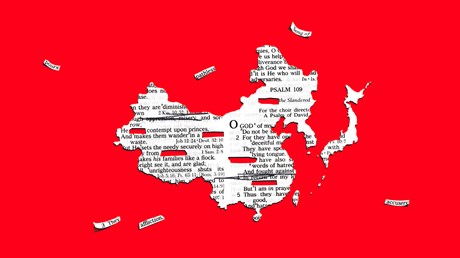
‘Two Taels of Bread’ and Other East Asian Heresies

Misconceptions about Jesus, Scripture, and salvation prevail.

American evangelicals are moving away from orthodox understandings of God and Scripture. This year’s State of Theology survey revealed the top five misconceptions that US evangelicals hold, as follows:

  • Jesus isn’t the only way to God.
  • Jesus was created by God.
  • Jesus is not God.
  • The Holy Spirit is not a personal being.
  • Humans aren’t sinful by nature.

CT polled five Christian leaders in China, Hong Kong, Japan, South Korea, and Taiwan to find out whether these modern heresies are also widespread in their respective regions, how believers can address them, and what heresies may be more common in their contexts.

Aaron Chau (name changed for security reasons), a house church pastor in Hubei, China

Heresies in China are quite different from America. Based on this study, American evangelical heresies are greatly influenced by liberalism. In contrast, Chinese heresies are greatly influenced by fundamentalism and superstition.

Most Chinese Christians will accept the authority of the Bible to the point that they have turned the Reformation motto sola Scriptura into “Read the Bible alone.” Unlike how American evangelicals do not believe the Bible is literally true, some Chinese Christians are too devoted to the belief that the Bible is indeed so.

American heresies arise because Christians are highly educated. Chinese heresies occur due to a lack of theological education, which is why heresies are more widespread in rural areas than in cities.

The most influential Chinese Christian heresy is the belief that Christ was born in China and his second coming has literally happened. Eastern Lightning is the cult that created this heresy based on their reading of Matthew 24:27. Another popular heresy, “Two taels of ...

Continue reading...


from Christianity Today Magazine https://ift.tt/FSNbUer

Saturday, October 1, 2022

Worship Can Sound Like Silence and Feel Like Rest

The Liturgy Collective Gathering aims to offer a reprieve to the leaders responsible for filling the soundtracks of our services.

It’s easy to find songs and hymns on the theme of rest and stillness. There’s Anna L. Waring’s “My Heart Is Resting, O My God,” Kari Jobe’s “Rest,” and Fanny Crosby’s “Jesus Will Give You Rest,” which beckons us:

Will you come, will you come?
How He pleads with you now!
Fly to His loving breast;
And whatever your sin or your sorrow may be,
Jesus will give you rest.

Even with musical selections like these, it can be a challenge to bring rest itself into liturgy and corporate worship. And worship leaders, whose Sabbath Sundays are filled with the work of preparing and facilitating services, aren’t always good models of rest in worship.

Leaders at the second annual Liturgy Collective Gathering are exploring how to find rest together through liturgy, art, and community, a topic inspired in part by the sense of burnout that has plagued church staff during the pandemic.

Initially, Tim Nicholson, music director at Covenant Presbyterian Church in Nashville, envisioned the Liturgy Collective as a culture-renewal project as part of his participation in the Gotham Fellowship program at Redeemer Presbyterian Church in Manhattan. He wanted to design a retreat or conference that would increase cooperation and fellowship between the worship directors at the 30-or-so PCA churches currently based in Nashville.

“That project fell on its face,” said Nicholson, who had hoped for a gathering in 2020. The pandemic abruptly put his plans on hold.

As gathering and travel became safer, he and fellow leaders were eager to come together for worship and encouragement after a difficult two years.

“Coming off of COVID-19, there was this need to get together,” ...

Continue reading...


from Christianity Today Magazine https://ift.tt/skSIy09

Friday, September 30, 2022

Brother Andrew Changed Me. His Approach Can Change India.

Gandhi wanted Christians to live more like Jesus. ‘God’s smuggler’ showed me how.

“You must change your thinking,” Brother Andrew told me when we first met.

He was responding to my “rockstar” reaction as I finally encountered one of my heroes, at a lunch buffet in South Asia in 2000. Like a super-fan, I had blurted out, “I never thought I would meet you.” His response was swift, on point, and left me pondering.

That was the man: simple, straight-forward, and leaving a large impression. Dressed in a T-shirt and shorts, Brother Andrew listened intently as I recounted my story of how his life had inspired my own journey into Christian ministry.

It was the first of many meetings I was privileged to have with him over the following 15 years. Each committed to my journal and fresh in my memory, even as I process the news that this mighty man of God has gone to be with his maker whom he loved and served, never wavering from the call to “strengthen what remains and is about to die” (Rev. 3:2).

Brother Andrew was called by God as a young man to go into closed countries and to minister to the church where it was oppressed and lacked resources—especially Bibles. I remember hearing from him that anyone could do what he did, because the power of God was the same. He often said that God has called us to go with his gospel, and that all doors are open to the good news of Jesus Christ. He enshrined this in the name of the organization he founded: Open Doors.

What began as a Scripture distribution agency has now transformed into a massive international organization also involved in training, socioeconomic development, research, and advocacy across 60 nations. But its focus continues to be the persecuted Church.

I remember Brother Andrew asking us if there was any region ...

Continue reading...


from Christianity Today Magazine https://ift.tt/KS7wMT6

From the Archives: When Disaster Strikes

Five articles about control and God’s providence amidst natural disasters.

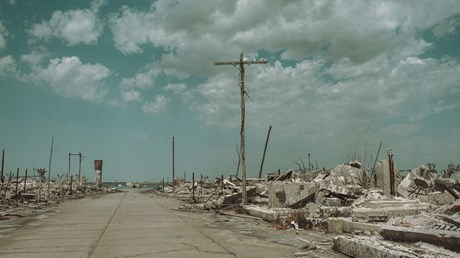
With a hurricane hitting the coast of Florida as well as the aftermath of a hurricane in Puerto Rico, a typhoon in Alaska, and a 6.4 earthquake in Taiwan, September has been a busy month of natural disasters around the world.

It can be overwhelming to think about the inevitability of earthquakes and storms. There is possibly nothing more unsettling than natural disasters to remind us of our smallness compared to nature’s great power.

These five articles remind us to put creation into the perspective of God’s providence. As Douglas Estes’s 2018 article states, “We grieve over the devastation wrought by storms … we do [what] we all can to help storm victims in Christ’s name, yet we still acknowledge even in our grief that ‘his way is in the whirlwind and the storm’ (Nahum 1:3).”

Click here for more from the CT archives.

Continue reading...


from Christianity Today Magazine https://ift.tt/QerU47F