Thursday, January 5, 2023

Christian Boomers Like Me Want Change Too

Some of us are working to change the unhealthy evangelical church culture we helped create.

In the last couple of decades, American Christian boomers (myself included) have been given an advance peek at the kind of obituary the church and the world has already begun to write about us.

Countless think pieces, podcasts, and online conversations have issued well-founded concerns and questions about the failures, flaws, and foolishness of evangelical church culture. These critiques are a magnifying mirror for baby boomers, since most of them speak directly to church cultures we helped create and support.

Not all these critiques are made in good faith—whether they’re from political scientists, sociologists, op-ed writers, exvangelicals, or from the generations born before and after us—but a surprising majority of them are.

For example, CT’s Rise and Fall of Mars Hill podcast details the leadership failure and organizational implosion of the church franchise led by Mark Driscoll. And while Driscoll himself was a Gen X pastor, Mars Hill was nourished in the soil cultivated by boomer megachurch leader culture.

Beyond the cavalcade of prodigal leaders exposed with predictable regularity for their abuses of power, boomer Evangelicalism has often been characterized in the broader culture by who and what we oppose, instead of whom we claim to serve.

As a result, our kids and grandkids are vacating the churches we built and inhabited with the goal of passing on our faith to the next generation. But they’re not the only ones leaving.

In my ownwriting over the past decade about spiritual formation in midlife and beyond, I’ve heard from hundreds of people my age who have been wounded by the very faith systems our generation created. Some boomers were chased away, while others quietly drifted out the ...

Continue reading...


from Christianity Today Magazine https://ift.tt/1SZ8dKw

Wednesday, January 4, 2023

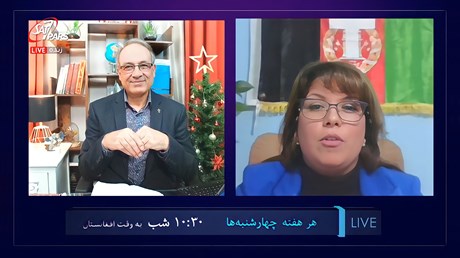
Afghan Christians Are Very Online

As Taliban increases restrictions on women and minorities, enterprising ministries offer seminaries and sermons where there is no church.

Since the fall of Afghanistan in August 2021, it has been nearly impossible for Afghan Christians to find fellowship.

Not that it was easy before.

“There was no local church where I could explore my questions about God,” said Parwin Hosseini, now living in Turkey. “But once I found answers abroad, I accepted Jesus.”

Her last name has been changed for security reasons, to protect her visa status.

A university graduate from Mazar-i-Sharif, Hosseini left her home country in 2019 and, unlike most local Afghans, is not a refugee. She fled her uncle’s arrangement of her marriage to a man nearly twice her age and obtained residency pursuing a master’s degree in economics. In Istanbul, a Turkish pastor gave her a Bible in Dari, her native language, and introduced her to an Afghan church when she moved to Ankara.

She had heard of the Good Book before. Today, she facilitates its study.

“I want to help evangelize women,” said Hosseini, coordinator for the nascent Afghan Bible College (ABC), “and then equip them for ministry.”

Begun in 2020 by a Korean missionary in Turkey, ABC is an online college with some in-person training. With ten affiliated lecturers, including three with PhDs, it aims to prepare leaders for the next generation of Afghan Christians—estimated to number up to 12,000 before last year’s takeover of their homeland by the Taliban.

No one knows how many remain in Afghanistan—but 12 are ABC students.

Many other Christians joined the national exodus sparked by the US military’s sudden withdrawal. Of the nations welcoming displaced Afghans, southern neighbor Pakistan tops the list, hosting more than 1.5 million Afghan refugees and asylum seekers ...

Continue reading...


from Christianity Today Magazine https://ift.tt/8ZyTe64

US Branch Splits from Open Doors International

Open Doors USA is now Global Christian Relief, but there is little indication of what led to the break.

The US affiliate of Open Doors has departed one of the largest global networks dedicated to supporting persecuted Christians.

Open Doors USA began 2023 by announcing its transformation into Global Christian Relief (GCR), retaining its board, staff, CEO, and sizable social media accounts under a new brand.

To do so, GCR cut its longstanding ties with Open Doors International (ODI), the global umbrella organization which produces detailed annual reports on the persecuted church, coordinates two dozen national affiliates, and maintains a 65-year-old network of Christian leaders on the frontlines in 70 countries. At the same time, ODI started a new US arm called Open Doors US, with a longtime Open Doors UK leader, Lisa Pearce, as its new CEO.

Anne van der Bijl, a Dutch evangelical known to Christians worldwide as Brother Andrew, founded Open Doors in 1955 to draw attention to the persecuted church and to provide it tangible support, most famously by distributing Bibles. He died last year at age 94.

Open Doors USA was always a separate organization affiliated with the international group. The two ministries are roughly the same size financially in their US tax filings, each reporting more than $30 million in contributions in 2020.

The recent change and communication was confusing to some supporters. And the two organizations don’t appear to agree on the narratives of what has happened.

A pop-up on GCR’s website says, “Open Doors USA is now Global Christian Relief.” Meanwhile, the new Open Doors US has an FAQ on its new website that says, “Has Open Doors changed its name in the US? No—Open Doors continues in the US under CEO Lisa Pearce, following the departure of former CEO David Curry.”

Curry, ...

Continue reading...


from Christianity Today Magazine https://ift.tt/QctKneV

Armenian Christians Endure Christmas Blockade in Artsakh

Closure of corridor to Nagorno-Karabakh by Azerbaijani activists stretches into third week.

There are no oranges in Artsakh for Christmas.

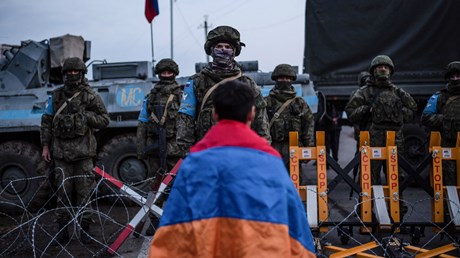
Celebrated on January 6 according to the local Orthodox calendar, holiday festivities will be curtailed this year in the disputed Caucasus enclave of Nagorno-Karabakh. Demonstrations by reported environmental activists from Azerbaijan have closed the one road connecting the mountainous territory to Armenia, and Russian peacekeeping forces have failed to intervene.

Over 100,000 Armenians depend on daily imports of 400 tons of food and medicine to the enclave they call Artsakh. With the blockade of the Lachin corridor now in its third week, local officials are warning of a humanitarian disaster as they implement price controls and ration remaining goods.

But the Christmas tree is lit in the central square of the capital, Stepanakert.

“People will carry on with the traditions as best they can,” said Aren Deyirmenjian, country representative for the Armenian Missionary Association of America (AMAA). “But we will reflect the love of a God who stays by your side, even when all goes wrong.”

During a 44-day war with 6,500 casualties in 2020, Azerbaijan recaptured three-quarters of its internationally recognized sovereign territory, before Russia engineered a ceasefire. The indigenous Armenian inhabitants controlled the enclave for the previous 30 years, claiming the right of self-determination in an unrecognized 1991 independence referendum.

Following its defeat two years ago, Armenia pursued peace treaties with neighboring Azerbaijan and Turkey, which had backed their Turkic kin with decisive drone technology. But these were interrupted by further clashes, in which Azerbaijan seized further territory in Nagorno-Karabakh and even along Armenia’s border.

And beginning ...

Continue reading...


from Christianity Today Magazine https://ift.tt/lKDmbqG

The State of Quiet Time: Who’s Most Likely to Practice Daily Devotions

Survey finds that two-thirds of churchgoers set aside time with God at least every day, but practices vary.

Most Protestant churchgoers spend time alone with God at least daily, but there’s a range in what they do in that time and what resources they use.

According to a study by Lifeway Research, nearly 2 in 3 Protestant churchgoers intentionally spend time alone with God at least daily, with 44 percent saying daily and 21 percent saying more than once a day.

Meanwhile, 17 percent of churchgoers say they are alone with God several times a week, and 7 percent say once a week. Others admit to being alone with God a few times a month (5%), once a month (2%), less than once a month (3%) or never (1%).

This time looks different for different churchgoers, but they are more likely to talk to God through prayer than to listen to him through his Word.

Churchgoers most often pray in their own words (83%), thank God (80%), praise God (62%) or confess sins (49%). Fewer than 2 in 5 read from the Bible or a devotional (39%). Fewer repeat a set prayer (20%), consider God’s characteristics (18%) or something else (1%).

But if churchgoers were to read something during their time alone with God, most would read from a physical Bible (63%). Others would read the Bible in a different format such as a Bible that includes additional commentary or devotional thoughts (25%) or Scripture from an app (20%).

Fewer than 1 in 3 say they would read from a devotional book that prints some Scripture (32%), and even fewer say they would read from a devotional book that doesn’t print Scripture (8%). Still, others say they would read a devotional from an app (7%) or read something else (3%).

Quiet time frequency

When it comes to spending time alone with God, women (48%) are more likely than men (38%) to say this is a daily habit for them. Those in the ...

Continue reading...


from Christianity Today Magazine https://ift.tt/rPRbXw7

Tuesday, January 3, 2023

Congress Remains Far More Christian than the Country

Denominational identity is dropping among lawmakers, but few are “nones.”

For the first time in the history of Pew Research Center’s Faith on the Hill report, you’re more likely to find a Baptist inside the halls of Congress than outside it.

As major denominations continue to decline, there’s a widening gap between Americans’ religious affiliations and those of their representatives.

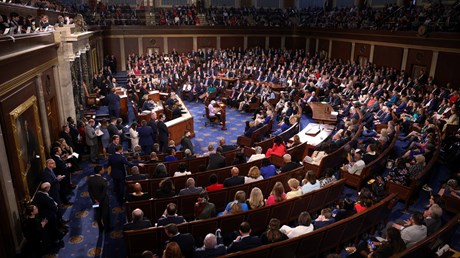
In the 118th Congress, 88 percent of legislators identify as Christians, compared to 62 percent of US adults. Just one of Congress’s 534 members is unaffiliated (0.2%), compared to 29 percent of the country.

In 2023, the number of Baptists in Congress—the most popular denominational identity—held relatively steady at 13 percent, while Baptist affiliation declined nationally, down to 11 percent from 15 percent two years before.

There are currently 57 Baptists in the House and another 10 in the Senate, including Southern Baptists Ted Cruz, Mitch McConnell, Lindsey Graham, and James Lankford. Other Baptists, such as Raphael Warnock, come from predominantly African American Baptist denominations like the Progressive National Baptist Convention.

Going back to 2008, the percentage of Americans who identified as Baptist had always exceeded Baptist representation on the Hill. For years, mainline traditions were overrepresented in the House and Senate, and members of Congress had been less likely than the US overall to identify with affiliations like Pentecostal and nondenominational.

Recently, though, more Christian lawmakers are picking generic labels rather than identifying with a particular denomination. In the 118th Congress, representatives were nearly twice as likely to call themselves “unspecified/other” Protestants (20%) or nondenominational (2.8%) than the most popular ...

Continue reading...


from Christianity Today Magazine https://ift.tt/kPVZbSG

Christian Fiction Queen Says Goodbye to Hallmark, Hello to Karen Kingsbury Productions

As novelists embrace entrepreneurship, they find ways to take more control.

Karen Kingsbury knows how to tell a story. But she’s never done it like this.

She has a woman on the ground. But not “a woman on the ground” on a page of her next novel. An actual woman on the actual ground, on the pavement in Franklin, Tennessee. The paramedics come, along with the police and a running man, and it all happens in a choreographed swirl—choreographed by Kingsbury, who has been called the “queen of Christian fiction,” along with her producer Natalie Ruffino Wilson and director Tyler Russell.

The cameras reset. The lights. The actors. Kingsbury stays glued to the monitors, closely watching how everything is framed. She hears the shout of “action,” and they go again—take two or 27—shooting the scene from the top.

The scene is part of Someone Like You, the first full-length feature from Karen Kingsbury Productions. Kingsbury is the author of more than 70 titles, including Sunset, the 2008 novel that rose to the top of the New York Times bestseller list, and several series about its fictional family, the Baxters. She has also written nine other series, 15 standalone novels, 10 children’s books, and some true crime. She’s sold, according to her calculations, more than 30 million copies.

And she’s not completely new to film, either. Hallmark has made four of her books into movies, another was released on the streaming service Pure Flix, and another did a circuit of film festivals and won a nice handful of awards before a general release in 25 theaters.

But this is the first time she’s making a movie herself. It’s her film. Her story. Her production studio.

“I really felt like it wouldn’t be what I pictured it to be unless ...

Continue reading...


from Christianity Today Magazine https://ift.tt/A74L9zH