Tuesday, October 17, 2023

Chapter 5: A Tectonic Shift in Technology

The pandemic greatly accelerated the adoption of and reliance on technology among churches.

The expansion of technology during the COVID-19 pandemic drastically shifted the landscape of church ministry. Though some changes were temporary, many will remain.

As one of the Arbor researchers put it, “The toothpaste can’t be put back in the tube.”

Our research indicates that more than two-thirds of respondents (67.5%) believe their church was reshaped due to its embrace of technology during the pandemic. Older churches and older participants were even more likely to see their congregation reshaped. Given these results, we believe the recent shift in technology has changed more than just a few activities, it changed the structure or landscape of ministry practice itself.

Based on Chapter 5 of the report, in this episode host Aaron Hill (editor of ChurchSalary) sits down with two researchers from the Arbor Research Group, Tyler Greenway and Terry Linhart to talk about the impact of COVID-19 lockdowns on technology in American churches. Featuring an in-depth interview with David Lee, a lead pastor whose church pivoted and found new ways to connect digitally and in-person with their congregation of commuters during the pandemic lockdowns.

Hosted by Aaron Hill, Editor of ChurchSalary

"COVID and the Church" is produced in conjunction with the Arbor Research Group and funded by the Lilly Endowment, Inc., through a grant from the Economic Challenges Facing Pastoral Leaders (ECFPL) initiative.

Executive produced by Aaron Hill, Terry Linhart, and Matt Stevens

Director for CT Media is Matt Stevens

Audio Engineering, Editor, and Composer is Tyler Bradford Wright

Artwork by Ryan Johnson

Continue reading...


from Christianity Today Magazine https://ift.tt/wJtBg0Y

Monday, October 16, 2023

This Is the Violent World in Which Christ Commands Peace

The horror of terrorism reminds us anew of how impossible it feels to love our enemies.

Violence, we are told, followed so closely the origin of human evil as to be almost indistinguishable. For soon after Adam’s sin, violence appears—first in the skin taken from animals (Gen. 3:21), then in the murder of a brother (4:8), and finally over the whole of the earth (6:11). Violence follows humanity through the Flood and into the world beyond it, taking root in generational fights of the tribes of Isaac versus Ishmael and Jacob versus Esau. Nations that bear so much in common, divided by that very common history: This is the story of Scripture and of our own world.

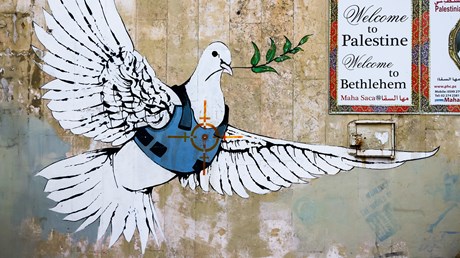
It is into this violent world, not some easier one, that Christ gave his disciples the instruction to turn the other cheek, to pray for their persecutors, and to give to those that ask without expecting things to be returned (Matt. 5:38–48). These teachings have been contentious wisdom ever since, especially when we are confronted with horrors like the terrorist attacks by Hamas in Israel this month. Following Jesus here feels so impossible. Who could live that way in a world like this?

But that is what Jesus commanded, and it is this violent world for which he died and in which he was resurrected. It is into this violent world that the Holy Spirit was sent, and fruits of that Spirit are peace, humility, gentleness, and goodness (Gal. 5:22–23). Perhaps we think such gifts and teachings are unfit for a violent world, but Jesus thought otherwise.

Perhaps such an approach to great violence—to turn the other cheek and to seek the good of one’s enemy—seems nonsensical. And indeed, many in church history rendered exactly that verdict on Christian pacifism.

Perhaps, as one objection goes, these ...

Continue reading...


from Christianity Today Magazine https://ift.tt/EXkjBig

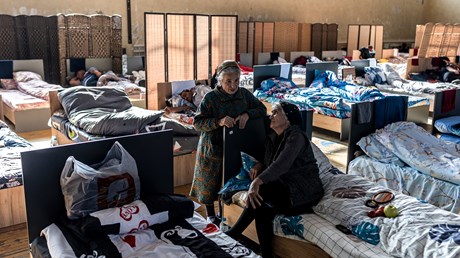
Armenia Struggles to Aid 100,000 Artsakh Refugees After War

Evangelical, Orthodox, and secular aid workers care for traumatized Nagorno-Karabakh kin they say were ethnically cleansed from their homeland. Azerbaijani Christians reply.

Karolin is one of 30,000 Armenian children without a home—again.

Fleeing the mountainous enclave of Nagorno-Karabakh in the face of Azerbaijan’s assault last month, the 12-year-old girl had an unexpected encounter. After crossing the Lachin corridor westward to Goris in Armenia proper, she found her beloved social worker waiting.

Arpe Asaturyan, founder of Frontline Therapists (FLT), was astounded as well. Amid the 100,000 refugees from what Armenians call their homeland of Artsakh, she had found the very same child displaced three years earlier. A special bond formed with then-9-year-old Karolin, who had gripped her tightly before returning home.

Located within internationally recognized Azerbaijani territory, the Armenian enclave suffered a bloody 44-day war in 2020. Over 6,000 soldiers died before a Russian-backed ceasefire left local Armenian authorities in control of only a portion of formerly held Artsakh land.

Karolin and her family went back anyway, vowing to continue their multigenerational presence. But after suffering malnutrition during an Azerbaijani-imposed nine-month blockade, they trudged three days in the slow-moving convoy of cars and buses across Lachin—the only road connecting the enclave with Armenia.

Over the week-and-a-half exodus, Artsakh residents crossed at a rate of 15,000 per day.

But the bittersweet reunion with Karolin is far from the worst of Asaturyan’s ordeal. Suffering in the chaos of relocation and the fog of war, several mothers told their children they would find their daddy in Armenia.

As counselor, Asaturyan was asked to tell them that their fathers had died.

“It is heartbreaking, and you know this will be the worst day of the rest of their lives,” Asaturyan ...

Continue reading...


from Christianity Today Magazine https://ift.tt/bjVCUlf

Saturday, October 14, 2023

Wither the Poisonous Plant of Hamas

A Palestinian Christian’s view of this week’s tragedy in Israel—and how to address the roots of the problem.

This article is published pseudonymously for the author’s safety.

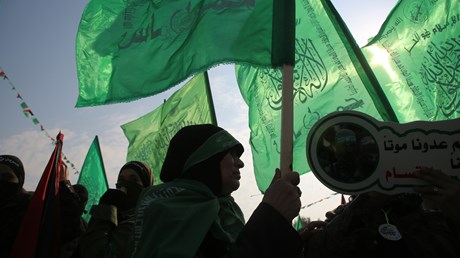
Israel has suffered a 9/11-scale attack by the Islamic Resistance Movement, commonly known as Hamas, which has devastated Jews and Palestinians alike. No words can describe the sadness and horror. But we must not allow this terrible event to cloud our vision or to push us into vengeance against civilians.

To even ask if I, a Palestinian Christian and Israeli citizen, condemn this violence is insulting. Of course I condemn it, and I also want to share with fellow Christians my view of how we can cut terrorism off at the root—thinking not only of the immediate military response by Israel but also of longer-term questions about justice, security, and God-given dignity for Israelis and Palestinians alike.

This month’s brutal attack against Israeli civilians came 16 years to the day after a Palestinian Bible Society worker in Gaza named Rami Ayyad was kidnapped and murdered because Islamist radicals believed he was doing missionary work. Despite public demands that Hamas leadership in Gaza find the criminals, no one was held accountable for his death.

Rami’s murder remains officially unsolved to this day, and some Palestinian Christians moved out of Gaza as a result of that violence. It appears that the abduction and killing were done by a radical faction, and Hamas’s leaders were not willing to confront them or hold them responsible.

A decade and a half later, we find ourselves in another cycle of violence—a fiercer and more complicated one this time. The Hamas onslaught is atrocity on an unprecedented scale, and Israel’s response must account for around 150 Israeli hostages in Gaza and a second war front in the north of Israel, ...

Continue reading...


from Christianity Today Magazine https://ift.tt/l14t0Nu

Friday, October 13, 2023

The Obscenity of War in This Present Evil Age

‘The last enemy to be destroyed is death,’ and that enemy is insurgent in the Israel-Hamas war.

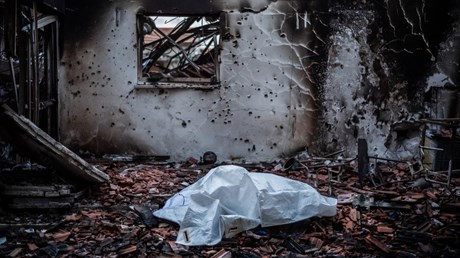
Less than a week into the Israel-Hamas war, the casualty count is already in the thousands. Around 1,300 people have been killed by Hamas terrorist attacks in Israel as of this writing, with another 1,300 killed by retaliatory Israeli strikes in Gaza and more than 9,000 wounded.

It is difficult to fathom that many bodies. It is even more difficult to fathom that at least some of them were children.

The most shocking report is an allegation that Hamas beheaded babies and toddlers, a claim that was walked back by the Israeli military and the White House, then seemingly confirmed by The Jerusalem Post. We can hope this story turns out to be false. But it may be true, which is terrible to contemplate, let alone to endure it.

In either case, there are many evils in this war that are not coming untrue. Our world since the Fall has always been infected with sin, death, and devilry. Sometimes we can forget or ignore this sickness and suffering, especially we fortunate few in the safe and wealthy West. But that ignorance is not possible for many of us right now. This war has brought our sickness back to the surface, opening anew a putrescent wound we cannot heal.

In 1755, the Spanish city of Lisbon suffered an earthquake so devastating that it cast doubt on God’s very goodness. Wars like this one give a similar shock. The disputed story of beheadings flew fast around the globe because it is uniquely unintelligible: Who could behead a baby? How bent would a soul have to be to do violence to an infant, a toddler—a babbling little being who should know only care and comfort, not war and death? My youngest is five months old. It is obscene that those babies are not as safe as she.

But then I remember Psalm 137, perhaps the darkest ...

Continue reading...


from Christianity Today Magazine https://ift.tt/sy8S0qN

Should Christians Share a Conference Stage with Theological Opponents?

Jackie Hill Perry, Sean McDowell, and others explain why they appear alongside speakers with different stances and when they’d refuse to join a lineup.

These days, Christian speakers have to carefully consider not just what they say—but those they say it alongside.

From packed-stadium conferences and denominational events to church retreats and ministry webinars, evangelical audiences pay attention to the names and faces getting platformed. These lineups can serve as organizational endorsements and offer followers an introduction to new voices worth paying attention to.

But today’s evangelicals are also sensitive to theological shifts among the leaders they follow. If they notice a popular speaker appearing alongside someone with a notably different stance—on same-sex marriage, women in ministry, spiritual gifts, prosperity gospel, salvation, sacraments, Scripture—is it a sign of softening views or compromising convictions?

These questions can get adjudicated online, as when Francis Chan defended sharing a stage with Benny Hinn because, he said, “it seems more effective to speak where there is less Bible teaching” than at an event where all the others agree with him.

Bible teacher Jackie Hill Perry didn’t realize how big a deal it would be for evangelical followers when she appeared with charismatic leaders, including from Bethel, at an event in 2019. Thinking back on the criticism, she emphasizes how the message communicates more about where a person stands than the fellow speakers do.

“You will see some people that become less honest, less bold, less biblical, less courageous, less plain when they go into particular spaces. You see that they’re actually coddling the environment instead of confronting the environment. I do think that’s a concern that we should have,” she told CT.

“I think we have to ask ...

Continue reading...


from Christianity Today Magazine https://ift.tt/yHgjAdq

‘No One Will Save You’ Has Evangelical Aliens

The new sci-fi horror flick by former missionary kid Brian Duffield has an unusual spiritual spin.

In his piece for CT, Aaron Earls explores what C. S. Lewis thought about evangelizing aliens—provided we discover they do indeed exist. But what if aliens came to proselytize us?

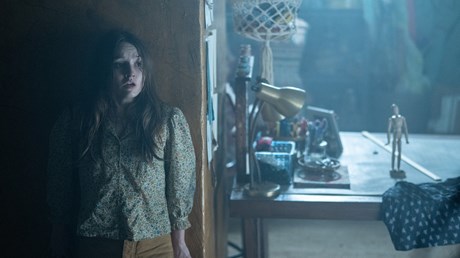
Directed by Brian Duffield and now streaming on Hulu, No One Will Save You is a mostly silent sci-fi horror film featuring only a single discernible line of dialogue. The film has already earned high praise from the likes of Stephen King and other horror genre heavyweights.

In it, a young woman named Brynn (played by Kaitlyn Dever) must fight off an alien invasion in her small town, from which she’s been ostracized for reasons we don’t find out until later. The movie’s extraterrestrials are archetypal “grey man” aliens, hauntingly recognizable to many a sci-fi fan.

But Duffield and his team wanted the alien takeover to be marked with spiritual overtones. “Having these religious aspects felt like a way to differentiate the aliens from other pop culture,” Duffield told Christianity Today. “I wanted there to be an aspect to them where you couldn’t debate [the aliens] because they had this faith that told them what to do.”

I was tipped off about some of these religious nuances early on by a thread on Twitter/X from director Guillermo del Toro. Known for horror films himself (such as Pan’s Labyrinth), del Toro praised No One Will Save You and said it embodies an “essential principle in Catholic dogma” where “grace and salvation emerge from pain and suffering.”

While that may not be quite what Duffield had in mind when crafting his film, he admits it’s “exciting that it could be read through a Catholic lens,” and that the film’s undeniable ...

Continue reading...


from Christianity Today Magazine https://ift.tt/8V3y0iM