Tuesday, November 14, 2023

As Erdoğan Goads on Gaza, Turkish Christians Prefer Peace

Amid centenary of the secular republic, Erdoğan inaugurates a significant new church as local believers navigate Muslim society’s stance on Palestine.
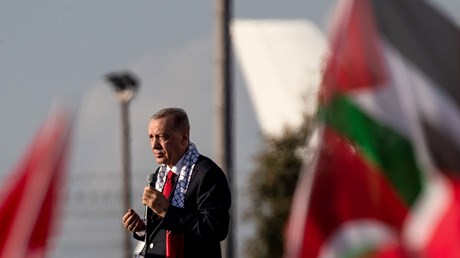
Defending Hamas, Turkish president Recep Erdoğan upstaged his own nation.

One day prior to last month’s 100th anniversary of the modern state of Turkey (now formally called Türkiye), an estimated 1.5 million people gathered for a pro-Palestinian rally October 28 and heard their Islamist-leaning leader denounce Israel as a “war criminal.”

“Hamas is not a terror organization,” Erdoğan had previously stated October 25. “It is an organization of liberation, of mujahedeen, who fight to protect their land and citizens.”

Observers noted that immediately after the October 7 terrorist attacks by Hamas that killed 1,200 mostly civilian Israelis and took 240 hostage, Erdoğan had struck a cautious tone. Reports circulated—denied by Ankara—that Turkish officials quietly asked Hamas leaders to depart the EU candidate country. And in advance of the rally, the president reiterated that he could never excuse acts that target civilians.

Then something changed.

Despite efforts over the past year to heal a diplomatic rift with Israel, Erdoğan now questioned its existence.

“What was Gaza and Palestine in 1947, what is it today?” he asked rhetorically, in reference to the establishment of Israeli statehood in 1948. “Israel, how did you get here? How did you get in? You are an invader.”

And widening his scope, the head of the NATO-member nation impinged his allies in religious terms, calling the Gaza attack “revenge” for the 15th century fall of Constantinople.

“Oh, West, I cry out to you, do you want to start your crusade against the Crescent again?” Erdoğan asked. “If you are making such efforts, know that this nation is not dead.”

The ...

Continue reading...


from Christianity Today Magazine https://ift.tt/iqejW0C

Monday, November 13, 2023

It’s Tempting to Rely on the IDF. But My Hope Is Messiah Yeshua.

Amid chaos in Israel, I will trust in the Lord.

What’s the time? The room was dark, but I was awake. I reached over to my phone and saw that it was too early. It was Saturday, October 7, a little before 7 a.m., and I was hoping to sleep in.

But as I looked at my phone, I noticed an unusual number of messages waiting to be read on WhatsApp and iMessage. As I began reading of what was happening in Israel, my stomach dropped and my eyes teared.

In a shocking and devastating turn of events, the terrorist group Hamas had launched a highly coordinated attack on Israel—what the world now calls Israel’s 9/11, a surprise strike by more than 3,000 rockets as well as by ground forces from the land and sea. In less than 24 hours, this evil attack left hundreds dead and injured, mostly Israeli civilians, but also some tourists and visitors. Scores more were kidnapped by Hamas.

It would be two weeks before my wife and I would be able to travel to Israel to be with our family, friends, and staff at Jews for Jesus, where I am the chief operating officer, during these unimaginably difficult days.

Stepping off the plane, we sensed a deep sadness and grief. You can feel it in the air and see it on people’s faces. Tel Aviv’s bustling and energetic nightlife is gone. Instead, there are constant memorials and gatherings to mourn. You must stay near known, safe locations so you can take shelter if a siren sounds.

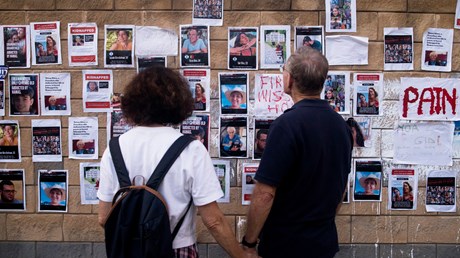
Now, a month later, the numbers have tragically increased: more than 8,500 rockets have been fired from Gaza, more than 1,400 innocent Israelis have been murdered and over 4,500 injured, and more than 240 hostages are being held in Gaza. And, since arriving in Israel, I have found time to reflect on the reality of this war.

It is impossible ...

Continue reading...


from Christianity Today Magazine https://ift.tt/L1KNr0P

I Do Belong; Help My Unbelonging

Making disciples in a secular age requires retrieving an old catechetical pattern: belonging, believing, behaving.

Christians, wrote Tertullian in the third century, “are made, not born.”

The African church father, in chapter 18 of his Apology, was reflecting on the Great Commission of the risen Christ, who challenged his followers to “make disciples” by “baptizing them in the name of the Father and of the Son and of the Holy Spirit, and teaching them to obey everything [he had] commanded” (Matt. 28:19–20).

The challenge of making Christians today is the same as it was in the third century. As a pastor once shared with me about his congregation’s ministry, “We are doing a pretty good job of evangelizing and baptizing people, but we are falling short in our obligation for teaching them to obey everything that the Lord commanded.”

The task of teaching everything Jesus commanded is not a matter of conveying a checklist of beliefs and behaviors necessary to belong to the church. Christian formation has always presupposed that believing, behaving, and belonging constitute a holistic approach to disciple-making. But over time, Christian catechetical practice settled into a pattern that prioritized believing as primary, while behaving and especially belonging were emphasized less.

Basic catechetical instruction in this traditional pattern started by learning the creeds and the basic teaching of Scripture, followed by baptism and reception into the membership of the church, followed by participating in the worship and practices of the faith. The content of catechesis in this traditional pattern varied depending on one’s particular denominational doctrine, but for centuries the order was consistent across Western Christianity.

If you were a Protestant in North ...

Continue reading...


from Christianity Today Magazine https://ift.tt/NKfPMmk

Friday, November 10, 2023

Nepal Earthquake Destroys Rural Churches, with Believers Pleading for Immediate Relief

More than 300 Christian families have been affected, says a local pastor.

Nepali Christians are mourning the loss of many of their own after a series of devastating earthquakes in early November.

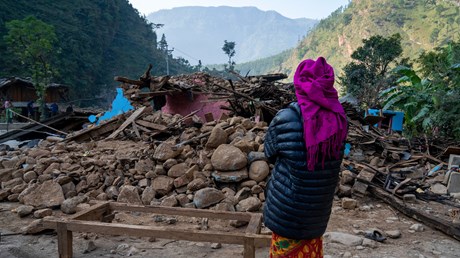
On Friday, November 3, a 5.6-magnitude earthquake rocked the mountainous Nepali villages of Jajarkot and Rukum West just before midnight, burying people under layers of rubble as they slept. A subsequent earthquake occurred on Monday, November 6, this time measuring 5.2 magnitude.

Many rural churches planted in the districts of West Rukum, Jajarkot, and Kalikot were “flattened,” Hanok Tamang, chairman of the National Churches Fellowship of Nepal, told CT. “It is true [that] many pastors, leaders, and Christians have died.”

Nepal’s current population is 31 million and is divided into seven states and 77 districts. The earthquake-hit areas are located in the midwestern region of the country.

The overall estimated death toll is more than 150 people so far, including more than 80 children, according to the non-governmental organization Save The Children. Villagers have taken to sleeping outdoors in freezing conditions for fear of continuing aftershocks, but also because their homes have been destroyed.

The 2023 earthquakes are the “deadliest” occurrence since the devastating 2015 quake near the city of Kathmandu when believers were attending church on a Saturday, as Sunday is a work day. “Many Christians were buried while they were worshiping on Sabbath and died,” the president of the Seventh-day Adventist Church in Nepal, Umesh Pokharel, told Adventist Review at the time.

Nepal’s Christians make up between 1 to 3 percent of the population, and Protestants were disproportionately affected in the 2015 disaster, said one Catholic leader.

Preliminary reports ...

Continue reading...


from Christianity Today Magazine https://ift.tt/Xno9z4J

A Leader of India’s ‘Untouchables’ Considered Christianity and Found It Wanting

Why B.R. Ambedkar, a Dalit himself, ultimately embraced Buddhism as the faith best for him and his community.

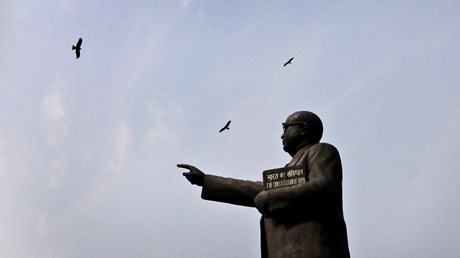
Last month marked the 67th anniversary of India’s most famous Dalit’s conversion to Buddhism.

“Though I was born a Hindu untouchable, I shall not die as a Hindu,” wrote Bhimrao Ramji Ambedkar, who devoted his life to abolishing the caste system and who embraced his new faith just two months before his death in 1956.

The Dalit community cherished the activist and politician so much that half a million of his followers followed him to Buddhism. But Ambedkar was not always certain he would leave Hinduism for this other Eastern faith and he spent years engaging with the Bible and Christian leaders. A friend who served as a Methodist bishop later said that Ambedkar had twice asked to be baptized, and when in Delhi, he attended an Anglican church and was friends with its vicar.

“I have had a great impact on my mind of two great personalities, Buddha and Christ,” he said at a Christian gathering in 1938. “I want a religion which could teach us to practice equality, fraternity, and liberty.” But though he admired Jesus, Ambedkar was disappointed by the blind spots church leaders appeared to have toward his community and ultimately found numerous tenants of Buddhism that spoke to the Dalit condition.

Today, while many Dalits have rejected Hinduism for Christianity, millions more have converted to Buddhism. On April 14 of this year, 50,000 Dalits and individuals belonging to tribal communities participated in a Buddhist mass conversion ceremony on Ambedkar’s 132nd birthday.

Christians seeking to reach those in this community today would do well to remember Ambedkar’s praise of Buddhism—and his critiques of the church. Many of these feel sadly still true today.

Continue reading...


from Christianity Today Magazine https://ift.tt/VO2Bk3s

Thursday, November 9, 2023

Pray for the Persecuted Church. But First Learn About It.

Amid rising persecution to Christians in the world, here are some stories that can guide your intercessions.

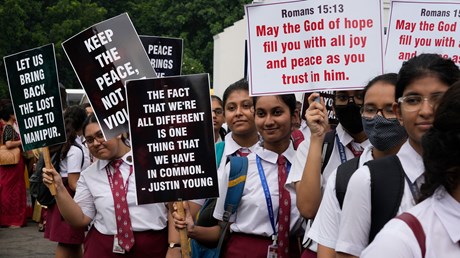
Christians around the world are praying for their 360 million brothers and sisters in Christ who live in countries with high levels of persecution and discrimination, as part of the International Days of Prayer for the Persecuted Church, which fall on Sundays November 5 and 12.

One in 7 Christians worldwide—including 1 in 5 believers in Africa, 2 in 5 in Asia, and 1 in 15 in Latin America—suffer greatly for their faith, according to the 2023 World Watch List (WWL). That’s up from 260 million in the 2020 report.

Among believers who live under threat of violence, in Latin America, Colombian Christians are most at risk, followed by Mexican. In Asia, Pakistan ranks first, closely followed by India and Myanmar, while Nigeria ranks first in Africa and worldwide.

The hardship affecting the greatest number of Christians is displacement, with 124,310 Christians forced to leave their homes or go into hiding for faith-related reasons, in addition to 14,997 Christians who were forced to leave their countries.

While persecution is on the rise, however, the number of Christians coming to the United States from countries on WWL dropped from 32,248 in 2016 to 9,528 in 2022—a decline of 70 percent.

In 2021, President Biden set the refugee ceiling at 15,000 before raising it to 62,500 after faith groups protested. This past year, the ceiling was set at 125,000—however, the US resettled only about 60,000 refugees in fiscal year 2023.

At CT, we seek to report on the news affecting the global church and share stories of how God is at work in the world. As the body of Christ cries out in pain, we can cry out to the Lord on their behalf. We can extend ...

Continue reading...


from Christianity Today Magazine https://ift.tt/mEiPklT

Meet the Zoomers’ Martin Luther

He plays Minecraft and talks church history on YouTube—and he’s organizing a new mainline reformation.

It’s October 31 in Denver. Snow is falling. A cutting wind makes the air feel much colder than it is. But nothing will stop Jake Boston, a Gen Z Episcopalian, from celebrating the holiday.

No, not Halloween—Reformation Day, when Protestants remember Martin Luther’s courageous choice to post his 95 Theses critiquing the Catholic church and launching the Reformation. Jake is reenacting that old story by tramping through the Colorado snow from mainline church to mainline church—60 in total—to post his own theses on their doors.

The lists, tailored to the seven American mainline denominations, critique their drift from orthodoxy into theological liberalism, challenging them to reaffirm the Resurrection, the divinity of Jesus, the authority of the Bible, and much more besides.

And Jake was not alone. A group of 1,000 Gen Z mainliners committed to their historic denominations—part of a grassroots group called Operation Reconquista—were working across the country to do the exact same thing. By the end of Reformation Day, they claim, they’d mailed, emailed, or physically posted their 95 theses to every mainline church in the United States, all without funding or a full-time organizer.

When I first heard about this operation, I admit I was both intrigued and worried. On the one hand, the past year has seen a surprising number of Gen Z–led spiritual renewals, most famously the Asbury revival. Maybe this was a similarly hopeful development?

On the other hand, their branding use of sordid military history was reminiscent of the “manosphere,” a highly online movement capturing the imagination of many young conservative men. (“Reconquista” is a nod to the Christian reconquest ...

Continue reading...


from Christianity Today Magazine https://ift.tt/DCyjJQ5