Thursday, September 8, 2022

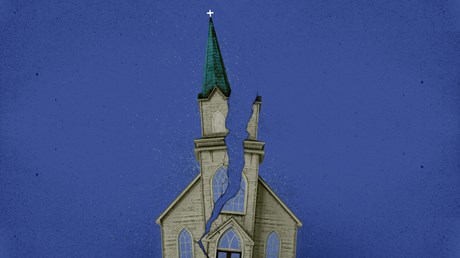
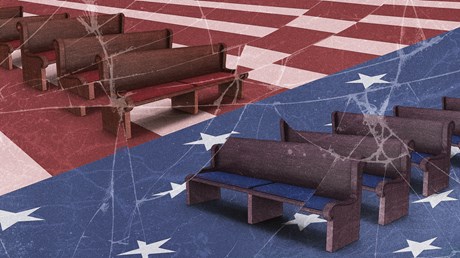
What Church Splits Can Teach Us About a Dividing America

As in the past, one can learn about our nation’s political divides by looking at our religious ones.
This piece was adapted from Russell Moore’s newsletter. Subscribe here.

An uncanny number of people are imagining the looming collapse of the United States.

Some speak openly of preparing for “civil war,” while others crow about the need for a “national divorce” between red and blue states. Most, though, whisper these thoughts. They look at a country seemingly at the breaking point and begin to wonder whether we may indeed be heading for a national conflict of some kind.

To answer such questions, perhaps even the most secular Americans should look to a religious phenomenon that has proven in years past to be a leading indicator of our nation’s future: church splits.

In the Baptist tradition, the year 1845 was key—we learned about it in church history alongside other momentous years like 325 (the Council of Nicaea) and 1517 (the start of the Protestant Reformation). In 1845, the denominational structure I grew up in—the Southern Baptist Convention—was formed.

We always spoke of our founding as having been spurred by a passion for world missions and evangelization. And yet most of us knew that 1845 wasn’t really a “founding” at all; it was a split. Yes, there was a dispute between northern and southern Baptists over the nature of missions—but the real debate was over whether to appoint slaveholders as missionaries.

What’s relevant about this split is, first, that it happened alongside similar splits in almost every other American Protestant denomination, most notably the Methodists and the Presbyterians. What’s also noteworthy is the timeframe: These splits happened well before the actual onset of civil war—the ...

Continue reading...


from Christianity Today Magazine https://ift.tt/fxUbr9F

Wednesday, September 7, 2022

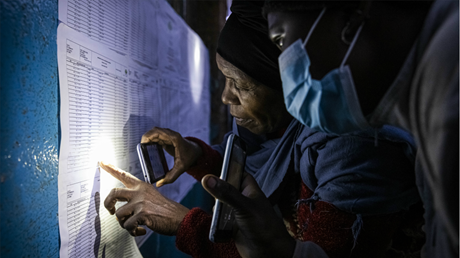
The Kenyan Presidential Election Is Over. The Conversation About Christians and Politics Has Just Begun.

William Ruto credited God and church leaders for his victory. Should this be the model?

William Ruto sees the hand of God in Kenya’s presidential election results.

“We have worked hard,” the outgoing deputy president told his supporters after the Supreme Court ruled he won the presidency, defeating five-time challenger Raila Odinga. “But as the Bible teaches us … some trust in chariots, some trust in horses, but we trust in God.”

In another victory speech, Ruto credited the many pastors who opened their pulpits to him, accepted donations from his campaign, and urged their congregations to pray for his electoral triumph.

“I have been prayed into victory,” Ruto said.

But as the nation wrestles with the results of the contested election and fallout from the monthlong dispute over the legitimacy of the results, Christians in Kenya are left reflecting on the role believers should have in the fraught political system. Christians make up nearly 90 percent of the population. How should they push for their preferred policies, participate in the political jostle of a campaign, and work to prevent the violence that has too often followed national elections?

Few spoke out against one-party rule

Church leaders, like the rest of Kenya, are still adjusting to a multiple-party system. The nation achieved independence from Great Britain in 1963. But before the decade was out, all political power had been consolidated into a single party. The second president, Daniel arap Moi, stayed in power for nearly 25 years. He has been praised by some—including Ruto—for providing stability, but also accused of human rights violations and called a dictator.

Christians occasionally criticized Moi during his long presidency, but their voices were generally muted. Most supported Moi, even ...

Continue reading...


from Christianity Today Magazine https://ift.tt/qARJ7EG

Tuesday, September 6, 2022

Sex Scandals and the Evangelical Mind

How stories of misbehavior distort our vision of male-female friendship in the church.

When news of Matt Chandler’s “inappropriate” online relationship popped up in my phone notifications last week, I was in the middle of a church staff retreat with my copastors, who are all male. I interrupted one of them to read the story aloud.

The news landed like a lead balloon between us, and then we came together as a group and talked about how stories like this make us feel and whether our own ministry friendships might be “inappropriate.”

The larger evangelical world was shaken too. Twitter exploded with a reanimated debate over the Billy Graham Rule, and many called on The Village Church to publicly release the investigation report. “It is always best practice to release the result of an independent assessment,” said Rachael Denhollander to The New York Times.

God’s call for truth and justice demand that leaders get to the bottom of what happened at The Village Church. But as one of the pastors of my local village-with-a-small-v church, that’s not the most important story for me to pay attention to. The question that matters more is not “What happened there?” but “What’s happening here, in me and among us, when we read stories like this?”

More specifically, how do scandals both small and large distort our view of male-female friendships in Christ? And when we read these narratives—one after another in the midst of an ever-accruing abuse crisis—how do our minds close off to the possibility of healthy brother-sister relationships in the church?

The stories we hear powerfully shape our imaginations, both positively and negatively.

For example, seeing Beth Moore teach the Bible has inspired a generation of ...

Continue reading...


from Christianity Today Magazine https://ift.tt/7IxPc2T

What We Sing as Creation Cries Out

The Porter’s Gate offers an album of “Climate Vigil Songs.”

Deckers Creek, an Appalachian tributary that runs through Morgantown, West Virginia, was once clean and clear. These days, it often has an orange hue.

“That’s the heavy metals leaching into the creeks and ground water,” said Zac Morton, a pastor at First Presbyterian Church, a nearby congregation of roughly 250. “It’s notorious as an acid mine tributary.”

In Appalachia, Morton says, addressing climate change and weaving the theme of environmental justice into liturgy reflects the experiences of his community. His church members live in an area littered with reminders and effects of exploitative land use, from higher rates of childhood asthma linked to coal-powered plants to poor water quality due to runoff from nearby mines.

“People here are dealing with the consequences of mismanagement and exploitation of the land,” he said.

The global church is entering the Season of Creation, observed from September 1 until October 4, the Feast of Francis of Assisi, patron saint of ecology. Millions of Christians from various traditions will focus on creation and stewardship, including in their musical worship.

Music that meditates on beauty and laments its destruction can be a call to action and an antidote for despair. New resources from The Porter’s Gate Worship Project—the album Climate Vigil Songs (released in July 2022) and an accompanying worship guide—aim to help congregations make time for exultation, lament, and action.

When creating the album, The Porter’s Gate artists initially struggled to find a sense of hope amid the news of extreme weather disasters and uncertainty for the future.

“The vibe was, ‘This is all so dark.’ Is this whole record ...

Continue reading...


from Christianity Today Magazine https://ift.tt/XVAQfeC

A Religious Movement Divided Against Itself (Probably) Cannot Stand

Liberal Protestants built a global elite in the 20th century. Its fracturing holds a caution for evangelicals today.

Political upheaval has produced a split within a large Christian community. The once-unified people have hardened into separate and oppositional cultures. On one side is a mix of institutional leaders, pastors, and intellectuals who claim a centrist, even progressive, mandate by God. Most of the seminaries, NGOs, and charities are run by these people, and those institutions tend to promote the same worldview. On the other side are pastors and allied political leaders who represent a numerically much larger group of Christians, many of them from the laity: business leaders, media personalities, and grassroots organizations headquartered in Washington, DC. This second group has staked out politically conservative territory and has made one of its chief aims the toppling of the other side.

Does any of this sound familiar

You might think this scenario describes the growing fault lines in American evangelicalism since 2016. It does, of course. But it also describes, with even greater accuracy, the state of affairs in liberal Protestantism 50 years ago, as documented in an excellent new work of scholarship, Gene Zubovich’s Before the Religious Right: Liberal Protestants, Human Rights, and the Polarization of the United States.

A professor of history at the University at Buffalo, Zubovich shines light on a dim corner of recent American history: the integral role that liberal, ecumenical Protestant leaders played in American liberalism in the mid-20th century, along with the underappreciated ways they helped drive the polarization that broke apart the mainline, opened the way for the Religious Right, and shaped our present moment.

Cracks in the edifice

The book’s subtitle mentions polarization, which implies a period of greater ...

Continue reading...


from Christianity Today Magazine https://ift.tt/opVaGxH

Friday, September 2, 2022

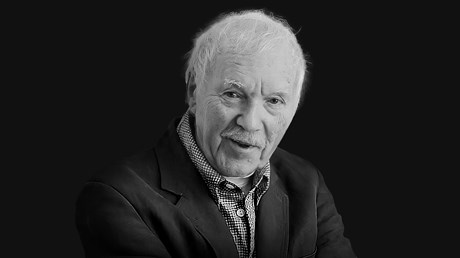
Died: Kees de Kort, Beloved Bible Artist

The Dutch illustrator’s bold and simple work shaped “the biblical cosmos of images” for millions.

Kees de Kort, an artist who gave generations of Dutch and German children their first indelible impressions of Bible stories, has died at home in the Netherlands. He was 87.

De Kort sold more than 33 million children’s Bibles worldwide and became so popular in the Netherlands and Germany that “De Kort” is sometimes understood as a synonym for “children’s Bible.” For many modern Europeans, “the biblical cosmos of images is unthinkable” without his work, according to the German national newspaper Die Zeit.

De Kort’s depictions of Bible stories were bold and simple enough to capture the imagination. His figures solid enough to seem real and relatable. As De Kort himself once explained, he wanted to paint a Christ who could ride a bike—who could live and move plausibly in the same modern world that Dutch children knew from their everyday lives.

Journalist Lodewijk Dros said that as those children grew up, they found that “Kees de Kort’s children’s Bible is one of a few that stays with you.”

As news of De Kort’s death on August 19 circulated on social media, fans shared their favorite images online. A number recalled one in particular: a portrait of Bartimaeus, the blind man who receives sight on the road to Jericho in Mark 10:46–52.

“I still see that image before me: that man shouting with his mouth wide open,” said Hanna van Dorssen, a theologian with the Protestant Church in the Netherlands. “So evocative.”

Lisbeth van Es, curator at the Icon Museum in Kampen, said the portrait has all the essential elements of De Kort’s style.

“Simple ...

Continue reading...


from Christianity Today Magazine https://ift.tt/dslp3SU

Thursday, September 1, 2022

Instead of Becoming a Pastor, I Minister as a Plumber

While praying and turning wrenches, I discovered a rich Christian life.

Ten years ago, I found myself at a vocational fork in the road.

I had spent years praying and dreaming about pastoring a church—studying theology, writing sermons, visiting hospitals, and interceding with folks toward this goal.

But like many millennials, I was tight on cash. With a growing family, I had to think frankly about the feasibility of seminary, how little money I’d make as a pastor, and how very little progress I felt I’d made in the Christian life. How was I to lead others down a path I had yet to travel?

A pastor at the church I was attending, knowing I was looking for a job, suggested I connect with one of the congregants who owned a plumbing company.

With the possibility of a job that didn’t require an advanced degree and could immediately provide security for my family, I chose to pursue plumbing with a prayer: God, make me the kind of person who can one day be a pastor in your church.

A decade later, I’m still plumbing. It turns out that work, manual labor in particular, had been sitting right under my nose as perhaps the most direct route to learning the skills needed by those who desire to lead the church. I suspect I’m not alone. Any of us can become better at following Jesus by focusing on the demands and spiritual realities of our work. Rightly understood, work is the training ground where good Christians are made.

How does work make us better Christians? How can we “redeem the time” we spend laboring?

If the Christian life can be summed up as being made “partakers of the divine nature” in and through Christ (2 Pet. 1:4, ESV), then I think it could also be said that the core activity of the Christian is prayer.

As defined by one 19th-century Church ...

Continue reading...


from Christianity Today Magazine https://ift.tt/FW79Xxk