Friday, October 7, 2022

What Can Kids Draw from the Chess Cheating Controversy?

As chess champion Magnus Carlsen accuses an American grandmaster, coaches are trying to develop a virtuous love of the game in young players.

A couple of weeks ago, my pastor’s nine-year-old son, who plays chess for fun, asked me what I thought about “Hans.”

He was referring to Hans Niemann, the American 19-year-old chess grandmaster facing cheating allegations.

World chess champion Magnus Carlsen, one of the best players ever, abruptly withdrew last month from a big tournament after he lost to Niemann. Carlsen later put out a statement saying that he believed Niemann had cheated extensively in his career, and that he found their previous game together to be strange. In response Niemann admitted to cheating online when he was 12 years old and in one inconsequential game when he was 16 but has denied cheating in more serious tournaments.

No one can say how Niemann might have cheated. During online chess, players can sneak a look at a chess engine—a tool that shows the best possible moves. Cheating during in-person games is tougher to imagine: Perhaps a player is getting signals from a person in the room, sneaking a look at an engine during a trip to the bathroom, or wearing some kind of buzzer.

The money and status reached in the heights of chess don’t come close to professional sports like soccer or football—why risk your reputation? But the pressure to succeed, and sin while trying, is a human condition. Cheating in chess may be more tempting in a way, because a chess engine can turn anyone into one of the best players in the world. In baseball, a steroid taker or pitch stealer would still have to be really good at baseball.

After more global hubbub than chess has seen in decades, Chess.com (one of the main websites for online tournaments) put out a lengthy report showing that Niemann had likely cheated in more than 100 online games, ...

Continue reading...


from Christianity Today Magazine https://ift.tt/7DCVLlb

Should Hispanic Churches in the US Preserve Spanish in Their Services?

Worship flows in the language of your heart.

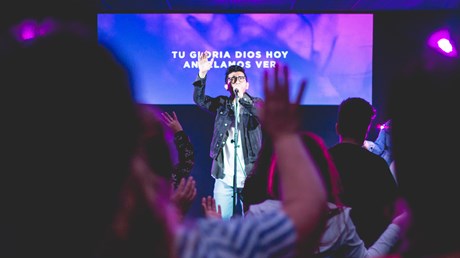
When Job González was 21, he felt God’s calling to dedicate his life to worship ministry. Raised in a Spanish-speaking family and church in Texas, he thought he would always sing the praises of the Lord in Spanish.

Since 1980, more Christians have spoken Spanish than any other language. Thanks to the growth of the church in Latin America, over 413 million believers have Spanish as their mother tongue today, compared to 250 million with English, according to the World Christian Database.

But Hispanics born in America have continued to prefer English over Spanish for worship. To González’s surprise, he ended up serving at a Hispanic Baptist church that moved away from the language.

In his hometown in Texas’s Rio Grande Valley, “Baptist Temple McAllen is a Hispanic church that, with the passing of generations, transitioned to have all its services only in English,” said González. “When the Lord called me to serve there it was pretty scary, because I had never led worship in English before.”

In Southern states with established Hispanic populations, spanning four or more generations of descendants born in the US, it’s more common to see Hispanic churches like the one in McAllen hold services in English only. Among newer arrivals, congregations stick to Spanish. Other churches offer a spectrum of bilingual, multilingual, and multiethnic worship, either with simultaneous translation or separate English and Spanish services.

Hispanic church leaders differ on whether the church has a role to play in preserving Spanish worship as a distinctive of their culture. Some believe worshiping in Spanish is central to their faith and services, while others believe it’s a ...

Continue reading...


from Christianity Today Magazine https://ift.tt/3hGOTjW

Moral Middle Candidates Want to Save America (But They Keep Losing)

Christians concerned about division, disinformation, and democratic norms are straining to reestablish the political center.

Phil Heimlich didn’t throw a party the night of the primary election. The Republican candidate didn’t gather his volunteers to watch the results come in, toast each other’s hard work, and crack inside jokes one last time as they waited to see how badly they’d lose to the incumbent congressman who props up election conspiracies.

He just went home.

He watched a movie with his kids and checked the vote tally on his phone as the ballots in Ohio’s Eighth Congressional District were counted.

His defeat didn’t surprise him. That didn’t make it taste less bitter.

“The problem, frankly, is that most evangelicals are on the wrong side,” Heimlich told CT.

Heimlich, a former Cincinnati city councilman and the son of the doctor who invented the Heimlich maneuver, was once a proud representative of the Religious Right. He still considers himself a conservative. And he’s still an evangelical. He attends Crossroads, a multisite megachurch.

But he’s not part of the Religious Right anymore.

Heimlich—along with a mostly unorganized group of candidates, activists, and operatives across the country—is straining to establish a religious middle. He likes the phrase “radical middle,” a term he learned from a Vineyard pastor.

Whatever it’s called, these are Christians who want to defend democratic norms against the partisanship that warps people into election deniers. They’re against the polarization that helps politicians win gerrymandered districts but doesn’t prioritize solving problems. They want the country to work. And they’re tired of toxic, trolling, apocalyptic politics.

Heimlich ran on support for Ukraine and the January 6 hearings and ...

Continue reading...


from Christianity Today Magazine https://ift.tt/MoVIP08

Thursday, October 6, 2022

After the Boomers, New Leaders Bring New Life to the Vineyard

The next generation of charismatic pastors doesn’t want authority but collaboration—and communities ready to follow the Spirit.

A lot of churches go through a stage of change when they get a new lead pastor. But Ted Kim actually wanted to change the stage.

The new leader of the Vineyard church in Evanston, Illinois, a suburb north of Chicago, wanted to get rid of it, just completely rip out the stage. Instead of the high platform at the front, he would put the stage in the middle of the sanctuary, with the seats arranged in a circle around it, so the congregation could see each other and participate with each other more in worship. The stage would also be lower, just a few inches above the ground, to reduce the elevation of the minister and the iconography of authority and power.

He’d been thinking about this for a long time—how to reorganize church. He thought about it as a kid growing up in the Korean Presbyterian congregation that his immigrant parents loved; as a college student in New York when he first experienced charismatic worship; in Chicago in seminary when he started to be discipled by the Vineyard pastor in Evanston; and when he got called back to lead that church in 2019.

Kim wondered: What would it look like for a church to be organized around the beauty of the Lord? What should church look like for a new movement of the Spirit for a new generation?

So when he had a chance to make changes in Evanston, he had a bold vision for what he could do. It was the kind of bold vision that the Vineyard, a charismatic denomination that started in the mid-1970s in Southern California, has long celebrated. People in the movement tell each other stories about leaders who didn’t wait for approval, call for a study, form a committee, or let themselves be checked by tradition or “how things are done.” They just listened to ...

Continue reading...


from Christianity Today Magazine https://ift.tt/3o7lKHa

Loretta Lynn: A Coal Miner’s Daughter in the #MeToo Age

The late country music star modeled what church leaders need: A bold willingness to stand up for women.

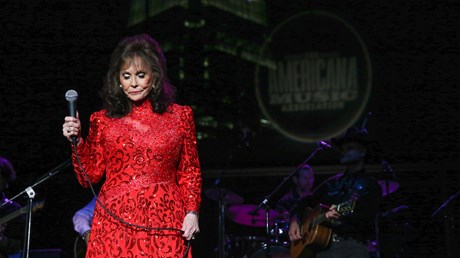
This past week saw the death of country music legend Loretta Lynn at the age of 90. One need not have been a country music fan (as I am) to find this woman’s life important. Her story is especially significant at a time when, five years into the mainstreamed #MeToo movement, we still face serious questions about the treatment of women in both the church and the world.

When I think of Loretta Lynn, my thoughts don’t go first to her music—although I love it and could recite lyrics all day. I think of the self-described “Honky Tonk Girl” and her meeting with Richard Nixon.

Invited to perform at the White House at the height of the Vietnam War, Lynn took advantage of an audience with first lady Pat Nixon to raise the matter of someone she thought was unjustly imprisoned.

“Pat,” she said, “I’ve been wanting to write a letter to … Richard.”

Of course, one does not refer to the president of the United States by his first name—and especially not in the White House. Lynn chalked up her faux pas to her background as a coal miner’s daughter and the fact that she hadn’t spent a lot of time in places of power. When a television announcer in Chicago asked her why she had referred to the president as “Richard,” she said, “They called Jesus ‘Jesus,’ didn’t they?”

In some ways, that one anecdote sums up much of why Loretta Lynn caught the imagination of so many people. With one sentence, she gently poked at an institution that needed more authenticity. And she did it with a mischievous wink, letting her listeners know that she was not nearly as unsophisticated as she let on and that she knew exactly what she was doing. ...

Continue reading...


from Christianity Today Magazine https://ift.tt/LGN2Qh7

No Doctrine of the Trinity Is an Island

As a new introduction emphasizes, the deep mysteries of Father, Son, and Spirit can’t be grasped in isolation.

Historically speaking, theological debates over the Trinity have been a major factor in the denominational breakdown of the church. Moreover, the extent to which these debates have influenced—and continue to influence—our individual conceptions of the Father, Son, and Holy Spirit cannot be overstated.

Take, for instance, the Filioque—the notion that the Spirit proceeds from the Father and the Son, as the Nicene Creed has it. The Filioque has been debated for over 1,400 years, heavily contributing to the church’s 1054 split into the Latin West (Catholicism) and the Greek-Byzantine East (Orthodoxy).

As those who reject the Filioque often argue, if the Spirit proceeds from the Father and the Son, then the Father’s unique role in the Trinity is undermined and the Spirit is made subordinate. Those in favor may retort: If the Spirit proceeds from only the Father, the Son’s divinity and salvific work are threatened. In short, acceptance or rejection of the Filioque affects how we define and distinguish the divine persons—and how we worship them, too.

This is true of the many other Trinitarian issues as well. And so, wrestling with how and why we think what we think about the Father, Son, and Spirit—how they relate, work, and reveal themselves to us—is an essential task. This task requires serious biblical, historical, and theological investigation.

Theologian D. Glenn Butner’s Trinitarian Dogmatics, an introduction to the doctrine of the Trinity, is a roadmap for just that. His approach to the Filioque is like that of the many other Trinitarian topics he tackles—ecumenical, fair, and nuanced. He distinguishes between hills to die on and hills to build bridges to, demonstrating ...

Continue reading...


from Christianity Today Magazine https://ift.tt/RE5JZdp

Wednesday, October 5, 2022

Bring Back Altar Calls

They could foster the worst in evangelical spirituality. But the best of it, too.

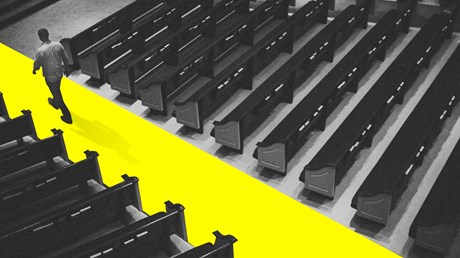
“Every head bowed and every eye closed.” If you recognize those words, you probably grew up in a church much like the one I did, where every worship service ended with an altar call or an invitation hymn. The pianist or organist played “Just As I Am” or “Softly and Tenderly” while those wanting to profess faith in Christ, rededicate their lives, or seek prayer could slip out of their pews and walk down the aisle to the front of the sanctuary.

The altar call is out of step with almost every sector of American Christianity right now, and it’s easy to see why. After all, an altar call can, at its worst, represent our key vulnerabilities as evangelicals, such as the confusion of an emotional experience with the gospel. How many nominal Christians in America, with hearts just as once-born as ever, have reassured themselves that they “prayed the sinner’s prayer”?

These practices also can appeal to our weakness for the quest of bigness, with pastors judged each week by how many people went forward. And an altar call can represent our tendency to be drawn toward novelty and away from the history and liturgy of the church.

Growing up, I almost assumed that altar calls were happening at the Council of Nicaea, or that Augustine of Hippo filled out a card noting his profession of faith (though he kind of did). I was a bit startled to learn that the invitation hymn the way I knew it—though rooted in older forms of revivalism—was mostly influenced by the Billy Graham crusades of the startlingly recent mid-20th century.

And yet.

In this publication a generation ago, historian Martin Marty argued that evangelical churches of that day were growing at least in part because ...

Continue reading...


from Christianity Today Magazine https://ift.tt/ADWxN1a