Tuesday, November 29, 2022

The Theological Foundations of Natural Science

Why the Christian worldview is the foundation of the method and spirit of science.

In my university teaching experience, my Chinese students often tell me, “From the very start of our elementary school, we have been taught to ‘believe in science.’” This is accepted even in the West. Many people adopt a view shared by the philosopher Bertrand Russell, among others, that natural science can bring about “definite knowledge.”

Natural science involves the human activities of interpreting empirical observations by reasoning through induction. However, in the realm of theology and metaphysics, there is a set of beliefs that the natural sciences cannot prove or disprove by simply applying scientific methodology. Therefore, science in itself is not neutral. Science has a set of beliefs on which its epistemic feasibility hinges that do not arise from within its own methodological system, and science as such cannot be an object of its own belief system. Even more, it has no right to call on people to believe in it.

Causality and “idols”

When natural science uses theoretical models to interpret and describe natural reality, it presupposes that every phenomenon or thing that comes into being has a cause of its existence and that nothing can arise out of nothing. The inability of physicists to explain the phenomena observed in the double-slit experiment led some scientists to wonder whether various natural phenomena happen outside the laws of natural causation. This, however, did not cause the scientific community in general to give up using scientific theories to explain the causal laws behind all phenomena.

Stephen Hawking’s interpretation of the Big Bang theory insisted that, strictly speaking, the universe did not arise from absolute nothing, but rather a certain ...

Continue reading...


from Christianity Today Magazine https://ift.tt/sUhIi4C

There Is No Such Thing as a ‘Safe Space’

Our culture values self-protection. But true love demands that we move toward each other.

One particular argument will figure in our family lore for generations: the adults upstairs, lancing one another with loud accusations, while the children downstairs slowly realized the holiday movie, planned for the afternoon, would not be.

Years later, I can’t remember the reasons for our conflict among extended family members. I only know the conditions were right. The “most wonderful time of the year” was upon us, and expectations were at a fever pitch.

It’s a risky business, this thing we call love. Unfortunately, in our cultural environment today—when personal safety is prized so highly—I fear we grow less and less tolerant for the normal bruising that happens in the contact sport of human relationships. We will love insofar as we are never hurt.

A quick swipe through social media reveals a lot of relationship advice centered on self-protection. We are taught to be vigilant against injustice, to repudiate toxicity, and to avoid situations that make us feel unsafe. The law of no trespass has become inviolable.

To be clear, I celebrate the growing emphasis on accountability. It is good and right to protect victims from abusers, and I welcome the more precise ways we’ve come to name the violations of human trust. Importantly, the Christian gospel never diminishes the trauma of sin and the necessity of repair. With a crucified Messiah at its very center—a scapegoat made to suffer for the sins of the world—it is a story that upholds the necessity of justice.

Still, I worry we are growing unrealistic in our expectations for human relationships. We seek safety, by which we often mean invulnerability. We imagine that incurring wounds in a relationship signals reasons to quit, ...

Continue reading...


from Christianity Today Magazine https://ift.tt/sPEKXUR

Former Southern Seminary Prof Sues SBC Leaders for Labeling Him an Abuser

David Sills admitted to misconduct but claims he has been “falsely attacked” by Southern Baptists and their investigative firm.

A former seminary professor and missionary who admitted sexual misconduct has sued a group of Southern Baptist Convention leaders and entities, claiming they conspired with an abuse survivor to ruin his reputation.

In a complaint filed November 21 in the Circuit Court of Mobile, Alabama, David Sills, a former professor of missions and cultural anthropology at Southern Baptist Theological Seminary, admits he lost his job in 2018 due to what he called “morally inappropriate consensual intimate” conduct with a student.

Sills claims the situation was consensual and alleges that SBC leaders, including Southern’s president, Albert Mohler, turned his confession against him, labeling him as an abuser.

They did so, according to the complaint, as a public relations stunt, aimed at improving the SBC’s reputation during a national sexual abuse scandal. That public relations effort, according to the suit, included an investigation by Guidepost Solutions into SBC leaders’ handling of alleged abuse cases, which was made public earlier this year.

“David Sills was repentant and obedient to the rules of the SBC,” the complaint alleges. “Defendants saw him as an easy target; a bona fide scapegoat.”

The complaint names Southern seminary and Mohler, as well as the SBC’s Executive Committee, SBC President Bart Barber, and his predecessor Ed Litton as defendants, along with several other leaders. Also named as a defendant is Lifeway Christian Resources, a research and publishing arm of the SBC, and Guidepost Solutions.

It also names Jennifer Lyell, a former seminarian and vice president for Lifeway, who has repeatedly alleged that Sills was abusive, an allegation Mohler has also made on social ...

Continue reading...


from Christianity Today Magazine https://ift.tt/xPWDJmr

Monday, November 28, 2022

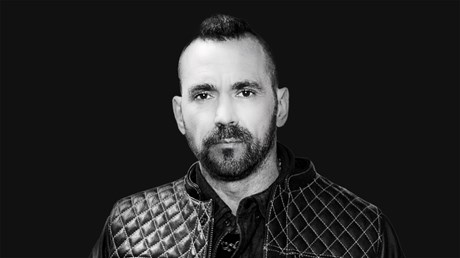
Died: Jason David Frank, Power Ranger Who Pointed to Christ’s Power

He trusted in God's strength because “Jesus didn’t tap.”

Jesus didn’t tap.

It wasn’t a joke to Jason David Frank. It wasn’t just a T-shirt or the first Christian line of mixed martial arts apparel or just the cool, multicolored tattoo he bore prominently on his forearm.

It was a statement of faith: We are weak, but he is strong; people are frail and fail and succumb to sin, but Christ bore all human weakness and conquered sin; dying he destroyed death. His love never fails. Jesus doesn’t tap.

“To me, he’s the true champion, he’s the only champion,” Frank told the Houston Chronicle in 2010. “There’s really only one true champion who’s been through, like, enduring pain, and that’s Jesus.”

Frank—who became famous for playing the Green Ranger and the White Ranger on the kids’ TV show Mighty Morphin Power Rangers, developed and taught his own form of martial arts called Toso Kune Do, and launched the Jesus Didn’t Tap line of apparel—died on Saturday, November 19. He was 49. It has been widely reported that he died by suicide.

Fans reacted to news of his death with anger, disbelief, empathy, bitterness, sarcasm, and sadness.

“[I’m] in shock and sad and don’t know how to take this. … jesus didn’t tap remember jason? why did you tap out like this????,” one fan wrote on Twitter.

“That’s sad man!” another said. “He’s been fighting for a min[ute].”

Fans gathered on Frank’s official Facebook page on Monday morning after the Thanksgiving holiday to celebrate his life and share how much he meant to them. They talked about watching Frank on the Power Rangers and meeting him at comic-con events, and shared how he encouraged ...

Continue reading...


from Christianity Today Magazine https://ift.tt/MgkHlsh

Thursday, November 24, 2022

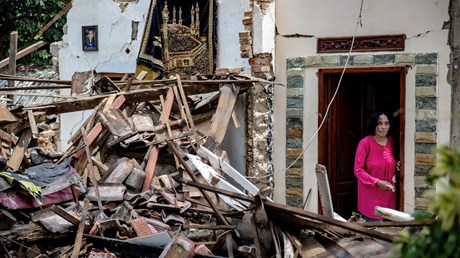
Indonesian Churches Organize to Aid Earthquake Survivors

After a powerful quake hit the island of Java this week, a network of local Christians raced to help.

When Denny Tarigan arrived in the remote village of Gasol, the earthy smell of wet soil assaulted his senses.

The sound of ambulance sirens permeated the air. Cars and motorcycles filled the narrow dirt roads. As the Indonesian Christian aid worker looked around, he saw blue makeshift tents lined with mats and blankets that were full of earthquake survivors, including children and the elderly.

What he also saw: Smiles on the villagers’ faces.

“The people are strong enough to survive this,” said Tarigan, who took a 10-hour car ride from his hometown of Yogyakarta to Cianjur, the regency where Gasol is located, on Wednesday.

“Most of them just don’t know what to do after this,” he said. “For now, they think that they need help from the government and other [disaster relief] agencies.”

While it is common in the United States for churches to engage in disaster relief, in Indonesia most humanitarian aid is provided by government agencies, international NGOs, and Muslim aid groups.

It is only in the past several years that Indonesian churches have started to engage in disaster relief, said Effendy Aritonang, the Indonesia country director for Food for the Hungry and secretary of the executive team of Jakomkris, the Christian Community Network for Disaster Management in Indonesia.

Engaging the aftermath

When the 5.6-magnitude earthquake occurred on Monday morning, Aritonang, Tarigan, and other members of Jakomkris kicked into action.

Made up of Indonesian nonprofits and churches, the team called for a coordination meeting to begin identifying needs and figuring out who could provide assistance.

A Mennonite group showed up to provide clean water. About 10 doctors and 20 nurses from a Christian ...

Continue reading...


from Christianity Today Magazine https://ift.tt/1ci9h6A

Wednesday, November 23, 2022

3 Popular Misconceptions About Advent

Christian leaders from Brazil, Colombia, France, and the Philippines weigh in on mistaken beliefs about the season.

For liturgy-loving Christians, Advent is a season of anticipation, marked by a posture of hopeful and expectant waiting.

But for many evangelicals, it may pass by almost unnoticed and unobserved, whether due to an unfamiliarity with the church’s liturgical calendar or a cynicism toward Catholic practices.

Advent means “arrival” or “appearing” and comes from the Latin word adventus. Each year, the season begins four Sundays before Christmas and lasts until December 25. It is divided into a period that focuses on Christ’s second coming and another that focuses on his birth. (Orthodox Christians observe a similar event, the Nativity Fast, from November 15 to December 24 before the Nativity Feast on December 25.)

Advent began in fourth- and fifth-century Gaul and Spain as a season intended to prepare believers’ hearts for Epiphany (January 6), not Christmas. Epiphany is a day to commemorate the Magi’s visit after Jesus’ birth (in the West) or Jesus’ baptism in the Jordan River (in the East).

Today, Advent customs may include reading and praying through an Advent devotional and lighting one of four candles inside an Advent wreath each Sunday, corresponding to four weekly themes: hope, love, joy, and peace. Most wreaths also include a centrally placed candle to symbolize Jesus, the Light of the World.

Yet, in parts of the Majority World and in countries where Catholicism is the dominant religion, evangelicals do not typically observe Advent.

French evangelical churches ignore Advent as part of “a gut reaction against anything that is liturgical, because it smacks of Catholicism,” said Gordon Margery, a Baptist lecturer at the Nogent-sur-Marne ...

Continue reading...


from Christianity Today Magazine https://ift.tt/d9wBFGf

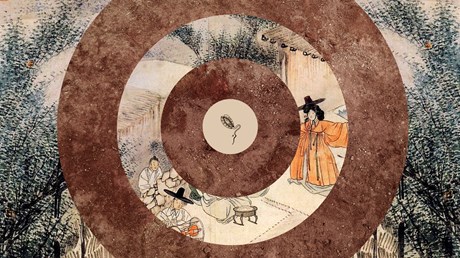
The Seed of Korean Christianity Grew in the Soil of Shamanism

An awareness of the spirit world was a crucial component in missionary efforts to spread the gospel.

Protestant missionaries arrived in Korea in the 1880s with a burning desire to share the gospel to the locals.

This was the golden age of Protestant missions, and missionary records captured detailed impressions of Korea’s political, social, and spiritual atmosphere.

The missionaries were perplexed to find almost no evidence of religious life there. Some even defined Korea as a nonreligious country where Confucianism merely served as a philosophical and moral guide for living.

They were wrong.

As they settled into their new lives, the missionaries soon realized that shamanism was a core religious belief in Korea. American missionary Homer B. Hulbert used the term “spirit-worship” for the animist, nature-worshiping practices he observed there, while fellow missionary George Heber Jones opined that Korea was rich in religious phenomena that comprised a mix of shamanism, Buddhism, and Confucianism.

Shamanism “appealed” to the Korean person’s soul and “inspired him with fear,” while “Buddhism appealed to his heart and inspired him with admiration and Confucianism appealed to his mind and inspired him with respect and veneration,” Jones wrote in The Rise of the Church in Korea.

These missionaries also grew to recognize how influential shamanism was in shaping and contextualizing the Christian faith in the Korean context.

Shamanism provided a deep awareness of the spirit world, which cultivated fertile space for evangelism. The female shamans’ spiritual power and authority also proved instrumental in growing a network of “Bible women” in the country.

How Christianity arrived in Korea

Korean scholars were the first to introduce Catholicism in the country. In the ...

Continue reading...


from Christianity Today Magazine https://ift.tt/DywoMkm