Friday, June 9, 2023

Finding Joy When the Fig Tree Does Not Bud

The prophet Habakkuk counsels us to trust in God’s promises despite our circumstances.

President George Washington envisioned a nation in which every person would sit under his own vine and fig tree with no one to make them afraid (Mic. 4:4). He dreamed of a people blessed by safety, prosperity, peace, and virtue.

Yet all too often, we claim God’s gracious promises as rights instead of blessings. What happens when “the fig tree does not bud and there are no grapes on the vines” (Hab. 3:17)? Can we still rejoice in the Lord and be joyful in God our Savior (v. 18)?

Even the church I’ve pastored for 12 years, a growing multiethnic congregation in Southern California, began with a death.

We were gifted a property and a handful of precious saints when another church in the Christian & Missionary Alliance denomination closed its doors. That church had boasted a rich heritage of discipleship and missions, but the fruit had fallen off their vine. Some of the congregants were angry to the point of fistfights. Others scribbled down pages of their complaints on a yellow legal pad. Many left and never returned.

They were mourning the loss of a church they had loved for decades and a future that no longer existed, even as we looked forward in anticipation to planting a new church. So during that season, I met with the remnant in their homes and listened to their stories.

We prayed and waited and grieved together beneath that barren fig tree. And by the time we replanted the church, they were some of our strongest supporters. They realized how the death of one church could lead to bountiful harvest in another (John 12:24).

The Book of Habakkuk speaks into our lives when we don’t feel God’s presence, when we don’t understand his ways, and when we don’t know if we can persevere. ...

Continue reading...


from Christianity Today Magazine https://ift.tt/Qu9xclp

Thursday, June 8, 2023

PCA’s 50th Anniversary Comes During a Season of Grief

Presbyterians expect less fight and more fatigue as they gather following the Covenant shooting and the deaths of Harry Reeder and Tim Keller.

In his first sermon since the death of his daughter and five others at The Covenant School in Nashville, Chad Scruggs, senior pastor of Covenant Presbyterian Church, referenced Isaiah 40 to describe how his family is coping: “We aren’t yet soaring on wings like eagles. We aren’t yet running without being weary. We’re simply trying to walk without fainting.”

His denomination, the Presbyterian Church in America (PCA), is also grieving. The PCA planned its upcoming general assembly (GA) as a celebration of its 50th anniversary, but leading up to the event, the country’s largest evangelical Presbyterian body has suffered a string of losses, including the Nashville shooting and the deaths of two prominent pastors.

At the end of March, the Covenant attack shook the denomination—no other US Christian school had ever been targeted in such a deadly crime. “In the wake of the horrid loss experienced by our friends at the Covenant School, it is right and good and even Christ-like for disorientation and grief to feel stronger and more formidable than feelings of hope,” wrote PCA pastor and author Scott Sauls in the hours after the shooting.

Six weeks later, Sauls was placed on indefinite leave from his position as pastor of Christ Presbyterian Church in Nashville after the Nashville Presbytery received complaints that Sauls had created an unhealthy work environment. Sauls admitted to the allegations and is undergoing a restoration process set out by the presbytery.

Last month, Presbyterians were shocked to lose two nationally known pastors in a span of 24 hours. On May 18, Harry Reeder, senior pastor of Briarwood Presbyterian Church in Birmingham, was killed in a car accident. The following ...

Continue reading...


from Christianity Today Magazine https://ift.tt/fYbuF0z

We Believe in the Power of the Gospel, Not the Gospel of Power

The Duggar documentary reminds Christians that we are the generation not of Joshua but of Jesus.

This piece was adapted from Russell Moore’s newsletter. Subscribe here.

The Amazon Prime docuseries Shiny Happy People: Duggar Family Secrets explores the reality-television homeschooling family and the system that shaped them—Bill Gothard’s Institute in Basic Life Principles—along with the fundamentalist mindset behind it.

Much of what it discusses felt nauseatingly familiar given all that we’ve seen in the last several years. One phrase, however, particularly struck me: the Joshua Generation.

Such was the language used by some sectors of the homeschooling and other movements to indicate the “long game” of training up those who could restore national greatness and steer the country back to a “Christian America.” And as Alex Harris, who was interviewed in the series, points out, some aspects of this idea became a reality.

There’s nothing wrong with preparing students for places of influence in politics (or medicine or business), but the Christian nationalism mixed up in much of the Joshua Generation rhetoric betrays a bigger question: the nature of real power. It seems the Joshua Generation came from a generation that did not know Joshua.

The language in the Book of Joshua alludes to the transition from Moses to his successor. Moses led the people of Israel out of the land of Egypt—and could see the Promised Land from a distance but didn’t enter it. On the other hand, Joshua led the people across the Jordan to defeat the Canaanites and take over the territory God had given them. The modern implications are clear: One generation of American Christians offers up a vision of a Christian America, and the next makes it happen.

Note that ...

Continue reading...


from Christianity Today Magazine https://ift.tt/C4HZJSj

Wednesday, June 7, 2023

Oklahoma Approves First Church-Run Charter School in US

Supporters see it as win for religious freedom and school choice, while opponents are gearing up to challenge its constitutionality.

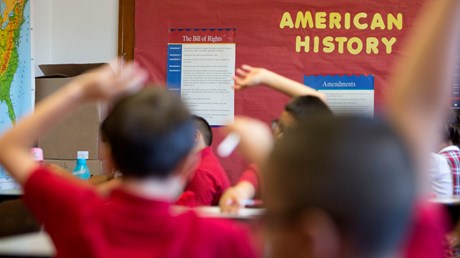
US courts have long wrestled with the extent to which government funding can be used at private religious schools. And on June 5, 2023, Oklahoma’s five-person Statewide Virtual Charter School Board pushed this much-debated question into new territory by approving plans for a religious charter school—the first in the nation.

Under the proposed charter, St. Isidore of Seville Catholic Virtual School plans to open in the fall of 2024 with up to 500 K-12 students from across the state. The school would be run by the Roman Catholic Archdiocese of Oklahoma City and the Diocese of Tulsa, but, like all charter schools, would be paid for with taxpayer dollars.

School choice advocates have won key cases at the Supreme Court in recent years, opening up more ways for public dollars to support faith-based education. A charter school—privately operated, but publicly funded—would be the most dramatic of these challenges to how the separation of church and state applies to education.

“The approval of any publicly funded religious school is contrary to Oklahoma law and not in the best interest of taxpayers,” Oklahoma Attorney General Gentner Drummond said in a statement after the Monday vote, warning that the board and state will likely face legal challenges.

The key question is not whether a charter would help or harm local education, but whether explicitly religious instruction at charter schools is constitutional, given the First Amendment’s protections against government establishment of religion. Moreover, Oklahoma law requires charter schools to be nonsectarian.

Recent trend

Advocates of expanding public funding to faith-based schools have been encouraged by three recent Supreme Court cases that ...

Continue reading...


from Christianity Today Magazine https://ift.tt/oCbMERs

Most US Pastors Use Armed Congregants as Church Security

With shootings on the rise, more churches are dropping no-firearms policies and turning to gun-carriers in their flock, survey finds.

Most churches have some type of security measures in place during worship services. Pastors point to intentional plans and armed church members more than other measures, but compared to three years ago, fewer say they have plans and more say they have gun-carrying congregants.

Numerous fatal shootings have occurred at churches in recent years. In March, an armed assailant killed six people at The Covenant School, a Christian school in Nashville, Tenn. Shootings have also occurred at other places of worship like Jewish synagogues and Sikh temples.

When asked about their protocols when they gather for worship, around 4 in 5 US Protestant pastors (81%) say their church has some type of security measure in place, according to a study from Lifeway Research. Still, more than 1 in 6 (17%) say they don’t use any of the seven potential measures included in the study, and 2 percent aren’t sure.

“Churches are not immune to violence, disputes, domestic disagreements, vandalism and burglary,” said Scott McConnell, executive director of Lifeway Research. “While loving one another is a core Christian teaching, churchgoers still sin, and non-churchgoers are invited and welcomed. So real security risks exist whether a congregation wants to acknowledge them or not.”

Security measures

In terms of security specifics, pastors are most likely to say their congregation has an intentional plan for an active shooter situation (57%). Additionally, most (54%) also say armed church members are part of the measures they have in place.

Around a quarter (26%) use radio communication among security personnel, while 1 in 5 say they have a no firearms policy in the building where they meet (21%) or armed ...

Continue reading...


from Christianity Today Magazine https://ift.tt/SxIjkcU

Tuesday, June 6, 2023

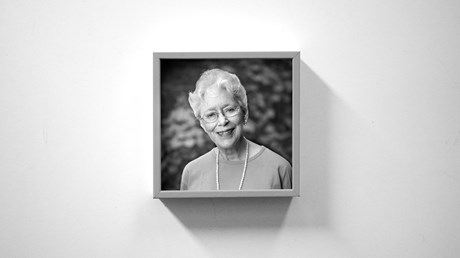
Died: ‘The Hiding Place’ and ‘The Cross and the Switchblade’ Coauthor Elizabeth Sherrill

“She knew how to tell a story with power.”

Few evangelicals know Elizabeth Sherrill’s name. But because of her, they know David Wilkerson, Brother Andrew, Corrie ten Boom, and dozens of other modern men and women who overcame by faith. Working closely with her husband John, she reported, wrote, and edited some of the most compelling, popular, and widely influential accounts of contemporary Christians on bookshelves today.

Sherrill had “an uncanny knack for always touching the heart strings,” according to the late Pentecostal leader Jack W. Hayford. She wrote more than 2,000 articles for Guideposts and coauthored more than 30 nonfiction titles. She founded Chosen Books with her husband and edited and published numerous Christian bestsellers, including Chuck Colson’s Born Again, Don Basham’s Deliver Us from Evil, and Bilquis Sheikh’s I Dared to Call Him Father.

Sherrill died in Massachusetts on May 20. She was 95.

“I marveled at the way the books she touched … inspired readers toward belief,” Jeff Crosby, president of the Evangelical Christian Publishers Association, told Publishers Weekly. “Elizabeth’s gifts as a manuscript stylist, editor, and publisher were enormous. She knew how to tell a story with power.”

Sherrill “found a perfect calling,” according to Rick Hamlin, former executive editor of Guideposts, “in coaxing stories out of others and then helping them share their highly personal accounts of God at work in their lives.”

She was born Elizabeth Schindler in Los Angeles, California, on February 14, 1928. She was raised in Scarsdale, New York, in what she recalled was a cold, nonreligious home with parents who got upset when she had any emotions. Her father, a private ...

Continue reading...


from Christianity Today Magazine https://ift.tt/LAtTMKe

Seafarer Ministries See Spiritual Needs in Rough Economic Waters

Merchant marines are still struggling, body and soul, after COVID-19 and supply chain disruptions.

Gary Roosma can attest to the challenges of organizing a worship service onboard a cargo ship.

It’s a complicated process, reaching out to the rotating cast of captains aboard the ships in the Port of Vancouver, for a congregation of sailors who may or may not even want to gather.

But experience has taught him it’s a worthwhile effort.

He remembers one officer who accosted him with a question.

“Where were you yesterday?” the man said. “We needed you yesterday.”

When Roosma asked why, the sailor explained there was a horrible storm at sea and the captain had sent him to do something on the deck as the waves crashed around them. As he held onto a rail, a massive wave hit the ship and carried the man overboard, out to the open sea.

“I knew I was dead,” the seafarer told Roosma. “All I could think of was ‘Lord, please watch over my family.’ And then I prayed, ‘It would be really nice if you would save me too.’”

At the instant he prayed, the man recalled, a rope brushed across his chest, and he grasped it and held on with every ounce of his strength. He dislocated his arm, but his life was spared.

“We need a service onboard this ship,” the man said, and Roosma, a chaplain at the Port of Vancouver with the Christian Reformed Church (CRC) Ministry to Seafarers agreed to lead them in prayer and worship that day.

Roosma was reminded, yet again, of the point of this unusual ministry. As the psalmist said in Psalm 107, “They that go down to the sea in ships, that do business in great waters; these see the works of the Lord, and his wonders in the deep” (vv. 23–24, KJV). Seafarer ministry chaplains are called to point that out to ...

Continue reading...


from Christianity Today Magazine https://ift.tt/nBQ8sdp