Thursday, October 12, 2023

Singapore Is a Fine City–Unless You're Trying to Talk About Mental Health

Pastors and church leaders want to spark more conversations about faith and wellbeing amid the country’s stressful education system.

Regina Hum was an 18-year-old student at Singapore Polytechnic when she began experiencing symptoms of depression.

“I started withdrawing from friends and family, feeling no need to share with them what I was feeling, and they also did not seem to notice,” said Hum, who worships at Faith Community Baptist Church. “Waking up feeling there was no purpose, having a sense of dread whenever I got up … It was unusual since I had finally started my dream arts course.”

An adult she trusted had once told her that if she was experiencing mental health problems, she would be treated differently by society. As a result, Hum did not tell anyone what she was going through for fear of being ostracized.

Hum’s experience of mental health struggles is an increasingly common one in Singapore. Students often contend with their mental health and well-being in an extremely competitive, success-oriented climate, which is often defined by clinching high academic results in nationwide exams like the Primary School Leaving Examinations (PSLE) and pre-university exams like the “O”, “N”, and “A” levels.

And while academic stress can cause an adverse impact on mental health, conversations about the latter are rare in the Southeast Asian country and, until recently, even rarer in churches.

Many youth feel like they have to live a “victorious Christian life” to be accepted in church as “blessings and successes are celebrated, but failures, struggles in faith, and doubts about God are usually shunned,” said Wei Hao Ho, who led a nationwide study that identified and discussed generational gaps in churches.

Nearly nine out of ten (86%) Singaporean ...

Continue reading...


from Christianity Today Magazine https://ift.tt/2Trdf75

Why Is One Jewish Family the Subject of So Many Conspiracy Theories?

A new book charts the centuries-long history of the Rothschilds and recurring waves of antisemitism.

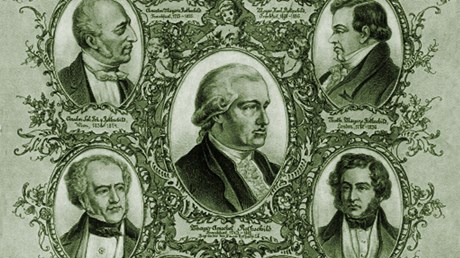
My first encounter with the Rothschild name happened in a thrift store. I was maybe nine years old and ran across a little wool dress coat just my size. The tag said “Rothschild,” and when I showed my find to my mother, her eyes lit up. “The Rothschilds are very famous and wealthy,” I remember her saying. “That’s probably a very nice coat.”

I don’t remember how nice it was, and at the time I didn’t know enough to wonder whether the Rothschilds, whose company made my coat, were connected to those Rothschilds, the remarkably successful banking family whose name is a longstanding byword among conspiracy theorists and antisemites. I think I wore it under the impression that the child in Rothschild was a family tribute (Roth’s child), or perhaps a nod to their sale of children’s attire.

But the seam in the word is not after the S but before it: roth-schild, from the German for “red shield.” It’s a reference to a marking on the home where Mayer Amschel Rothschild lived as he founded the family dynasty in the 18th century. By day, he served in the court of the princely House of Hesse, and at night, he returned to the cramped quarters of the Judengasse, Frankfurt’s prison-like, one-street ghetto in which Christian authorities literally locked the local Jewish population every night and every Lord’s Day.

That’s but one small piece of the history covered in Jewish Space Lasers: The Rothschilds and 200 Years of Conspiracy Theories, a new release from journalist Mike Rothschild, who is—as the delightfully clever cover notes—“no relation” of those Rothschilds. The subtitle undersells the scope of the work, which ...

Continue reading...


from Christianity Today Magazine https://ift.tt/k0DvzH5

Wednesday, October 11, 2023

‘We Do Need Healing’: What First Nation Christians Make of Australia's Indigenous Representation Referendum

Leaders want a seat at the table. Not all are sure about changing the Constitution.

Aboriginal and Torres Strait Islander peoples in Australia were not granted citizenship until 1963. They were not counted in the census until 1967.

To Brooke Prentis, the former CEO of the Christian social justice organization Common Grace, these numbers aren’t just dates and statistics. As a woman from the Wakka Wakka people of south-west Queensland, they’re a part of what she calls her “living memories.”

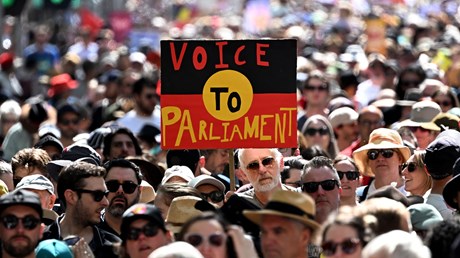
Australia’s upcoming Voice referendum will be yet another milestone etched in Prentis’s mind. On October 14, the country will vote “yes” or “no” to amendments in the Constitution that would recognize Aboriginal and Torres Strait Islander peoples (a broad term for people hailing from 274 small islands between the state of Queensland and Papua New Guinea) as the First Peoples of Australia.

If the Voice referendum is passed, the Constitution will be amended to include language that calls for the formation of a body called the Aboriginal and Torres Strait Islander Voice; that this Voice may make representations to the Parliament and the executive government of the Commonwealth on matters relating to Indigenous Australians; and that Parliament has the power to influence what the Voice looks like.

These constitutional changes are one of the calls to action in the Uluru Statement from the Heart, which was crafted in 2017 after dialogues with Indigenous peoples across the country.

Aboriginal and Torres Strait Islander peoples comprise 3.8 percent of the Australian population. Just over half (54%) identify as Christian according to the 2016 census, but they face challenges within their own First Nations communities and also from the larger Australian Christian community. ...

Continue reading...


from Christianity Today Magazine https://ift.tt/UlIhztR

Chapter 4: The Miracle of Plates and Pews

Why did some faithful congregations shrink in size and giving while others witnessed explosive growth?

According to some, the pandemic season was a plague of biblical proportions. It is not surprising then that the testimony of some pastors sounds like the story of the widow whose jar of oil and flour in 1 Kings 17 did not run out.

Instead of a devastating drought, some pastors talked about how God kept his promises and “they never worried about money.” Other pastors told a different, more tragic story.

In surveys, focus groups, and interviews, pastors were asked about the finances and attendance during the pandemic season. This included inquiries about sources of income, changes in giving, and ways of measuring attendance for online and in-person participants.

Based on Chapter 4 of the report, in this episode host Aaron Hill (editor of ChurchSalary) sits down with three researchers from the Arbor Research Group, Eric Shieh, Ebonie Davis, and Jon Swanson to talk about the common experience of what we’re calling The Miracle of Plates and Pews. Featuring an in-depth interview with Caryn Bell-Palo, an executive pastor who helped her church navigate through the financial challenges brought on by lengthy lockdowns in her home state of Washington.

Hosted by Aaron Hill, Editor of ChurchSalary

"COVID and the Church" is produced in conjunction with the Arbor Research Group and funded by the Lilly Endowment, Inc., through a grant from the Economic Challenges Facing Pastoral Leaders (ECFPL) initiative.

Executive produced by Aaron Hill, Terry Linhart, and Matt Stevens

Director for CT Media is Matt Stevens

Audio Engineering, Editor, and Composer is Tyler Bradford Wright

Artwork by Ryan Johnson

Continue reading...


from Christianity Today Magazine https://ift.tt/Y1ntJXu

Tuesday, October 10, 2023

Fellowship of Christian Athletes Let Back in San Jose Schools After Court Rejects District’s ‘Double Standard’

Ninth Circuit ruling boosts First Amendment protections for faith groups denied campus access.

Serving as the Bay Area director for the Fellowship of Christian Athletes (FCA), Rigo Lopez didn’t expect that his work would involve court depositions and early morning emails with lawyers. Or that he’d have to pray for and defend students whose teachers campaigned against their club and its convictions.

But Monday marks a long-awaited milestone in the Christian organization’s legal fight in California. FCA learned it can finally return to San Jose public schools—four years after losing its official recognition over its faith statement and a month after a significant First Amendment ruling in federal appeals court.

Following major religious liberty decisions at the Supreme Court, the FCA ruling offers a new precedent for free exercise protections. “It makes other cases much more likely to succeed,” according to Becket senior counsel Daniel Blomberg, part of the legal team for FCA.

FCA’s case was the latest in a string of lawsuits over campus access for Christian clubs. The Christian Legal Society at UC Hastings, the Chinese Student Christian Fellowship at the University of Iowa, and InterVarsity Christian Fellowship at Tufts, Vanderbilt, Wayne State, and Cal State have gone through similar fights.

After almost 20 years in operation in San Jose local schools, FCA was similarly denied approval as a student club in 2019, when it was declared in violation of district-wide nondiscrimination policies. A teacher at one school, Pioneer High, had campaigned against the club’s “anti-gay prerequisites,” since FCA’s faith statement for student leaders included a line about God instituting marriage between a man and a woman.

Following the pandemic, the San Jose school district ...

Continue reading...


from Christianity Today Magazine https://ift.tt/lK5dbaV

Billions in Federal Aid Helped Christian Orgs Survive the Pandemic

A CT analysis of federal data shows that ministries received about $7 billion in forgiven PPP loans, with about a third of US churches receiving funding.

During the COVID-19 pandemic, the US government provided an unusual lifeline to tens of thousands of Christian organizations and churches through forgiven Paycheck Protection Program (PPP) loans under the CARES Act.

That aid amounted to roughly $7 billion in forgiven loans, according to an analysis of federal data by Christianity Today. Most of that funding—about $5 billion—went to churches. Federal aid has gone directly to churches before, in the form of disaster assistance, for example, but rarely at this level.

A new study on the impact of COVID-19 on the American church from Arbor Research Group and ChurchSalary, a ministry of Christianity Today, estimates that slightly more than one-third of all US churches received a PPP loan of some kind. (Almost all of those loans were forgiven, though there were rare instances of churches repaying the federal government.)

The individual loans to Christian organizations ranged from a few hundred dollars to over $10 million. Heritage Christian Services, a Christian organization serving those with disabilities, received one of the largest forgiven loans at about $10 million. Life.Church in Oklahoma received about $7 million.

Some ministries did not seek the aid because they wondered about future conditions attached to it. Steve Smith, the administrative bishop for the New York state Church of God in Christ, told CT that some of his pastors in the state worried there might “be some attachment later on that will have negative effects,” he said.

Early in the pandemic, both Christian financial advisor Dave Ramsey and Crown Financial Ministries’ CEO Chuck Bentley urged churches not to take the PPP money. Ramsey argued it allowed the government into the “management” ...

Continue reading...


from Christianity Today Magazine https://ift.tt/SD0C6Wq

Monday, October 9, 2023

Died: Loren Cunningham, Who Launched Millions on Short-Term Missions

YWAM founder saw “waves” of young people carrying the gospel to every nation.

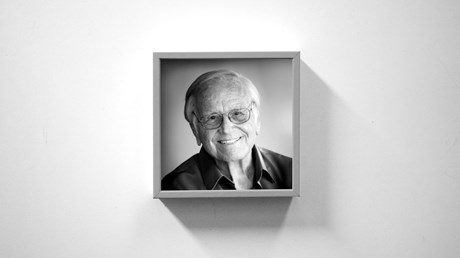
Loren Cunningham, the charismatic visionary who launched Youth With a Mission (YWAM) and mobilized millions of young people for short-term trips, died on Friday morning. He was 88.

When he was only 20, Cunningham was praying and saw an image of a map, but the map was moving. Waves were crashing on the shores of every continent, receding, and then crashing again. The picture appeared to him like “a mental movie,” he would later say, and as he looked closer, the waves were young people, “kids my age and even younger,” fulfilling the Great Commission to “go into all the world and preach the gospel to all creation” (Mark 16:15).

The vision became the core idea for YWAM. The organization has called it “a God-initiated, destiny-defining, foundational covenant from God to birth a new missions movement.”

According to Cunningham, it took him a few years to understand what he’d seen. But it ultimately empowered him to “deregulate” missions, sending more people, more quickly, to more places where they could “proclaim the truth of God and display His love.”

YWAM (pronounced WHY-wham) currently operates in more than 2,000 locations in nearly 200 nations. The organization stopped counting how many young people it sent on short-term missions in 2010, when the total number was around 4.5 million.

“What I like about the spirit of YWAM is being willing to charge hell with a squirt gun,” Steve Douglass told CT a few years before he died, when he was president of Campus Crusade for Christ International (now Cru).

Kris Vallotton, a senior leader at the prominent charismatic Bethel Church in Redding, California, said on Friday that YWAM is “probably the ...

Continue reading...


from Christianity Today Magazine https://ift.tt/c40wGyj