Wednesday, January 24, 2024

After New Hampshire, Evangelicals Brace for Another Trump Nomination

Is the church ready for a repeat?

After former president Donald Trump bested former South Carolina governor Nikki Haley in New Hampshire on Tuesday, the GOP primary outcome that many have expected all along may soon be here.

“This race consolidated faster than any race I can remember,” Dan Darling, director of the Southwestern Baptist Theological Seminary’s Land Center for Cultural Engagement, told Christianity Today. “It’s feeling a little bit like an incumbent candidacy.”

Haley outlasted a large field of presidential hopefuls, but after a second-place finish in the Granite State, her underdog campaign may soon run out of road, political analysts say.

“New Hampshire has a much more moderate and much less religious electorate than South Carolina, and she still could not win,” said Kyle Kondik, an elections analyst with the University of Virginia Center for Politics. “The bottom line is that I think she needed to do better in New Hampshire to demonstrate wider appeal among the base Republican electorate.”

In New Hampshire, she also performed well with college graduates and self-identifying moderate and independent voters. But nearly 9 in 10 of New Hampshire voters who considered themselves “very conservative” supported Trump, The Washington Post’s exit polling found. And white evangelical Christians—about 20 percent of voters in the contest—went for Trump by 70 percent.

Trump won support from a strong majority of white evangelical voters in the 2016 and 2020 presidential elections, but his popularity also heightened ideological divisions within churches.

“Christians should be preparing now for a really divisive and contentious campaign season,” ...

Continue reading...


from Christianity Today Magazine https://ift.tt/a0hfEcq

Tuesday, January 23, 2024

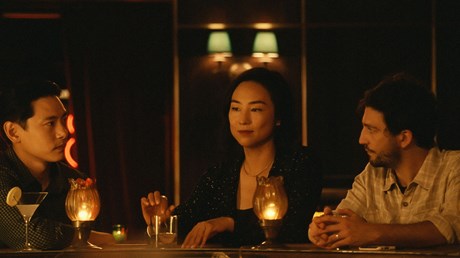
‘Past Lives’ Is the Anti-‘Notebook’

We’ve romanticized stories of destiny-driven love—even at the expense of fidelity. This Oscar-nominated drama shows the beauty of limits.

Last year, I watched The Notebook for the first time. For nearly 25 years, it has epitomized Hollywood romance, with stills of Allie (Rachel McAdams) cupping Noah’s (Ryan Gosling) face as they passionately kiss in the rain serving as a pop culture shorthand for love and destiny.

The Notebook is also a story of infidelity. The story toggles between the present, where an elderly Noah comforts an Alzheimer’s-afflicted Allie, and the 1940s, where Allie cheats on and ultimately leaves her fiancé to reunite with Noah after years apart. In the modern scenes, Noah models faithfulness despite its difficulty, but in the earlier part of their timeline, Allie’s unfaithfulness is presented as the peak of romance.

The 2023 film Past Lives, which was nominated for five Golden Globes and Academy Awards including best picture, subversively shows the extent to which that impermanent perspective has permeated our thinking about life and love. Nora (Greta Lee) lies in bed with her husband Arthur (John Magaro), who is processing his feelings about an upcoming visit from his wife’s former love interest, Hae Sung (Teo Yoo):

Arthur: I was just thinking a lot about what a good story this is.

Nora: The story of Hae Sung and me?

Arthur: Yeah, I just can’t compete.

Nora: What do you mean?

Arthur: Childhood sweethearts who reconnect 20 years later only to realize they were meant for each other.

Nora: We’re not meant for each other.

Arthur: In the story I would be the evil white American husband standing in the way of destiny.

“I’m the guy you’re leaving,” Arthur reiterates later, “when your ex-lover comes to take you away.”

Arthur’s confession surely echoes the inner narrative ...

Continue reading...


from Christianity Today Magazine https://ift.tt/J0DeKkw

Evil Is as Evil Does

The Zone of Interest, nominated for Oscars including Best Picture, is a Holocaust horror movie about the corruption of the human heart.

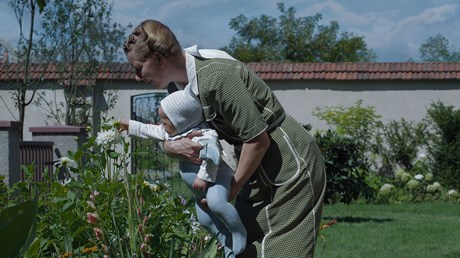
The verdant and blooming garden outside the family home in The Zone of Interest, nominated for 2024 Academy Awards including Best Picture and Best Director, could appear in some celebrity’s home tour on YouTube. In the yard, the mother swoops her baby down close to sniff various flowers. “This one is phlox,” she says.

But all is not lovely here. Audiences might have a hint from the two minutes of complete darkness that begin this razor-sharp film that something is wrong in this Eden. The family dog sprints anxiously through most of the immaculate shots, grabbing food off the sumptuously set tables and knocking things over. Just over the garden hedge, you can see the puffs of smoke from a train going by. At night, there is a strange red glow on the bedroom walls, and no one seems to be able to sleep.

This is 1944, and the Höss family live in their beautiful home next to the gate of Auschwitz concentration camp, of which Rudolf Höss is the commandant. This part of the story is historical fact: Höss was the real commandant of Auschwitz, responsible for creating an efficient machine for destroying human lives. He later confessed he’d overseen the killing of 3 million people.

But The Zone of Interest, an antiseptic term Nazis used to describe the area around Auschwitz, doesn’t include that kind of historical detail about World War II or the Holocaust. Director Jonathan Glazer, who spent ten years on this project and shot it on location at Auschwitz, knows audiences have seen many such movies and may, by now, be numb to their presentation of those horrors. Instead, he drops the audience straight into the Höss family life as they swim and eat birthday cake. Only slowly do we absorb ...

Continue reading...


from Christianity Today Magazine https://ift.tt/9hziIMv

Monday, January 22, 2024

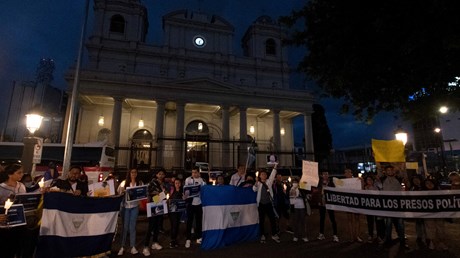
Nicaragua’s Relentless Crackdown on the Church Continues

Even with the recent release of imprisoned priests, Ortega’s regime continues to target Christian organizations with an “absolute intolerance for dissent.”

Bad news has been the norm for Catholics in Nicaragua, where clergy and church groups have been frequent targets of a wide-ranging crackdown for years. But on January 14, 2024, they received a happy surprise: The government unexpectedly released two bishops, 15 priests and two seminary students from prison and expelled them to the Vatican.

Those released included Bishop Rolando Álvarez, a high-profile political prisoner who was detained in 2022 for criticizing the government and then sentenced to 26 years in prison for alleged treason.

They also included priests detained by President Daniel Ortega’s government in late December 2023 for expressing solidarity with Álvarez and other political prisoners. Days later, Pope Francis criticized the regime in his New Year’s message and then called for “respectful diplomatic dialogue.”

Nearly six years after mass protests erupted against Ortega and then were brutally repressed, these prisoner releases offer some hope to Nicaragua’s opposition. As my research has shown, however, the Ortega regime is unrelenting in trying to retain power, which suggests this is not necessarily a turning point. In fact, the government reportedly took yet another priest into custody on January 16.

Why target the church?

Ortega first led Nicaragua from 1979 to 1990, after his left-wing revolutionary organization, the Sandinista National Liberation Front, or FSLN, spearheaded the overthrow of dictator Anastasio Somoza Debayle. In the 1980s, the FSLN clashed with the Vatican and church hierarchy over the group’s socialist politics, even as many poorer Nicaraguan Catholics embraced them.

When Ortega took office again in 2007, however, he did so with the blessing of ...

Continue reading...


from Christianity Today Magazine https://ift.tt/NiuZFMD

Wrestling with Awkward Stories in the Old Testament

Cringeworthy passages can derail our yearly Bible reading plans. How do we interpret them?

On a recent trip to Egypt, the chefs at our hotel put out a remarkable buffet of culinary delights presented with both excellent taste and exquisite aesthetics.

One of our group members served onto his plate a beautiful spread: a cucumber disc topped with a triangle of cheese, a baby tomato, and a swirl of what looked like a dessert mousse. Sitting back at our table, he took a bite, and his eyes went wide as he grimaced. “What is this?!” he cried. That sweet mousse turned out to be liver pâté—not at all what he was expecting!

It’s the time of the year when many Christians embark on a new Bible reading plan. Reading through the Bible from cover to cover is a wonderful practice that exposes us to its less-familiar passages. We may discover new treasures along the way, tucked between the stories we know.

But we may also encounter passages we’d rather spit out of our mouths, like my friend’s liver pâté. Expecting inspiration, we may instead find hard words, troubling scenes, or confusing episodes. Especially if we hoped for an endorphin-generating Bible study—a “feel-good” devotional to carry us through our day—we can often find ourselves disillusioned.

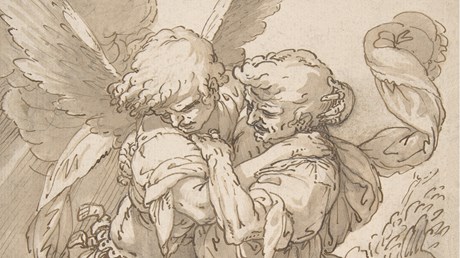
As a Bible scholar, I’ve devoted my life to reading and understanding the Scriptures. I’ve watched the pages of the Bible come alive over and over again. Even so, I still encounter passages that trouble me. But I keep in mind something another Bible scholar and friend of mine, Esau McCaulley, once said—which is that we should engage with such difficult passages in the same way Jacob interacted with the angel in Genesis 32:

After a lengthy absence, Jacob was heading home to Canaan. ...

Continue reading...


from Christianity Today Magazine https://ift.tt/bqf4LGa

Friday, January 19, 2024

Grace in the Age of Guilt

Rules and moral codes won’t save us in an era of judgment, hate, and superego. What will save us is mercy.

This piece was adapted from Russell Moore’s newsletter. Subscribe here.

Years ago, I talked with someone who told me how hard it was to keep a moral grounding in the sex-fueled drinking atmosphere of his college. That’s not unusual, but then he told me more about his college.

Turns out it wasn’t a party school but a fundamentalist separatist Christian college, where holding the hand of a date would get a student suspended and dancing would get a student a ticket back home. It’s the kind of place where the student conduct manual is longer than the federal code for maintaining nuclear reactors.

I said, “So in spite of all that strictness, the people there were wild?” He said, “The people there were wild because of all the strictness.”

He went on to talk about getting in trouble for listening to a contemporary Christian music artist (the beat is too worldly) or for his hair being too long or for breaking some other regulation.

“After a while, you start to lose the sense of what’s really bad and what’s not,” he said. “Your conscience gets broken when you know you’re going to be a rule breaker no matter what you do. Once that happens, it’s—well, it’s party time.”

I thought of that man as I read Mark Edmundson’s book The Age of Guilt: The Super-Ego in the Online World. Like in that conversation, my first thought when seeing this book was, What age of guilt? This is an age of shamelessness. His argument, though, was different than what I expected, and it’s one that those of us who are Christians should take seriously.

Politico’s Michael Schaffer sums up the fractured nature of American life right now this way: ...

Continue reading...


from Christianity Today Magazine https://ift.tt/5HKJVLA

Thursday, January 18, 2024

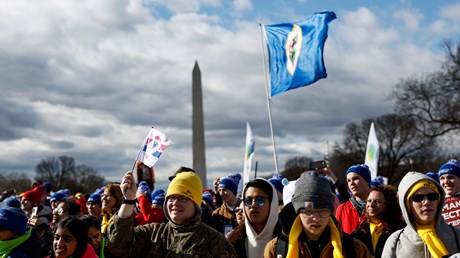
Why 100,000 Pro-Lifers Still March in DC

Even after the reversal of Roe v. Wade, evangelical activists see a bigger fight to change Americans’ minds on abortion.

Catholic activist Nellie Gray organized the first March for Life in 1974 to mark the anniversary of the Supreme Court ruling that legalized abortion nationwide. Fifty years later, even after the 2022 decision overturning Roe v. Wade, pro-life activists don’t feel like their work is done.

After Dobbs v. Jackson Women’s Health Organization, the organizers of the national march, which is considered the largest annual pro-life gathering in the world, “thought that it was possible last year that we’d have a little bit less of a crowd,” Jeanne Mancini, president of March for Life, told Christianity Today.

“And much to my delight, that was wrong. We had a really big crowd last year, a very energized crowd, and we anticipate nothing less this year.”

Days before the 2024 event, an arctic blast sweeping much of the US blanketed Washington, DC, closing area schools and delaying flights for the thousands of participants traveling to the capital. Friday’s forecast projects another dusting of snow.

But pro-life organizers don’t expect the inclement weather to deter turnout: They estimate the crowd could be 100,000 people. The crowd will draw from student campus activists, worshipers from evangelical and Catholic churches, staff from pro-life nonprofits, and volunteers from all over the country.

“We’re proud to be there every year en masse, you know, showing the nation that this generation rejects abortion and that we’re moving forward in our mission in this post-Roe world,” Kristan Hawkins, founder and president of Students for Life of America, told CT.

Hawkins anticipates more conversations this year about the pro-life movement’s goals moving forward, particularly ...

Continue reading...


from Christianity Today Magazine https://ift.tt/ZVquiyk